Author

Browsing

The closed-toe wedge mules trend is quietly reshaping the way women approach heels. No longer defined by dramatic height or impractical silhouettes, today’s most relevant shoe designs focus on balance, comfort, and refinement. Wedge mules—once overlooked—are now among the most worn styles in editor wardrobes, offering polish without strain and structure without stiffness.

This evolution reflects a broader shift in fashion: elegance that works in real life. Closed-toe wedge mules feel intentional, modern, and wearable—making them one of the smartest footwear investments right now.


Why the Closed-Toe Wedge Mules Trend Is Gaining Momentum

Fashion is prioritizing longevity and comfort more than ever. Closed-toe wedge mules sit perfectly at the intersection of those values.

They offer:

  • The stability of a wedge
  • The refinement of a closed-toe
  • The ease of a mule silhouette

This makes them ideal for workdays, travel, and long hours on your feet—without sacrificing style.


The Most Notable Styles Leading the Trend

Rather than one dominant design, the closed-toe wedge mules trend is being shaped by several refined silhouettes, each offering a slightly different mood.

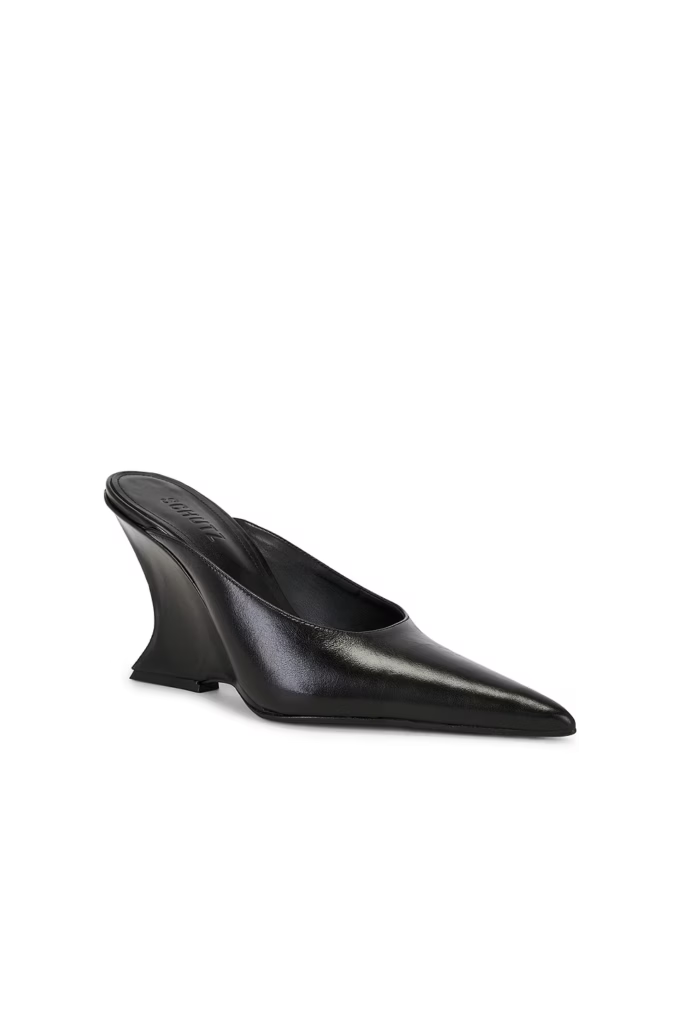
Women’s Pointed Wedge Pumps

Sharp, elegant, and elongating, Women’s Pointed Wedge Pumps are ideal for those who want structure with comfort. The pointed toe adds sophistication, while the wedge heel provides support—making them a strong alternative to classic heels.

Women's Pointed Wedge Pumps
Women’s Pointed Wedge Pumps

Perfect with tailored trousers, midi skirts, and polished workwear.


Marilyn Wedge Mule

The Marilyn Wedge Mule leans into timeless femininity. With soft lines and an elegant profile, this style feels understated yet refined—an easy choice for day-to-evening dressing.

Marilyn Wedge Mule
Marilyn Wedge Mule

Style it with straight-leg denim or fluid dresses for effortless polish.


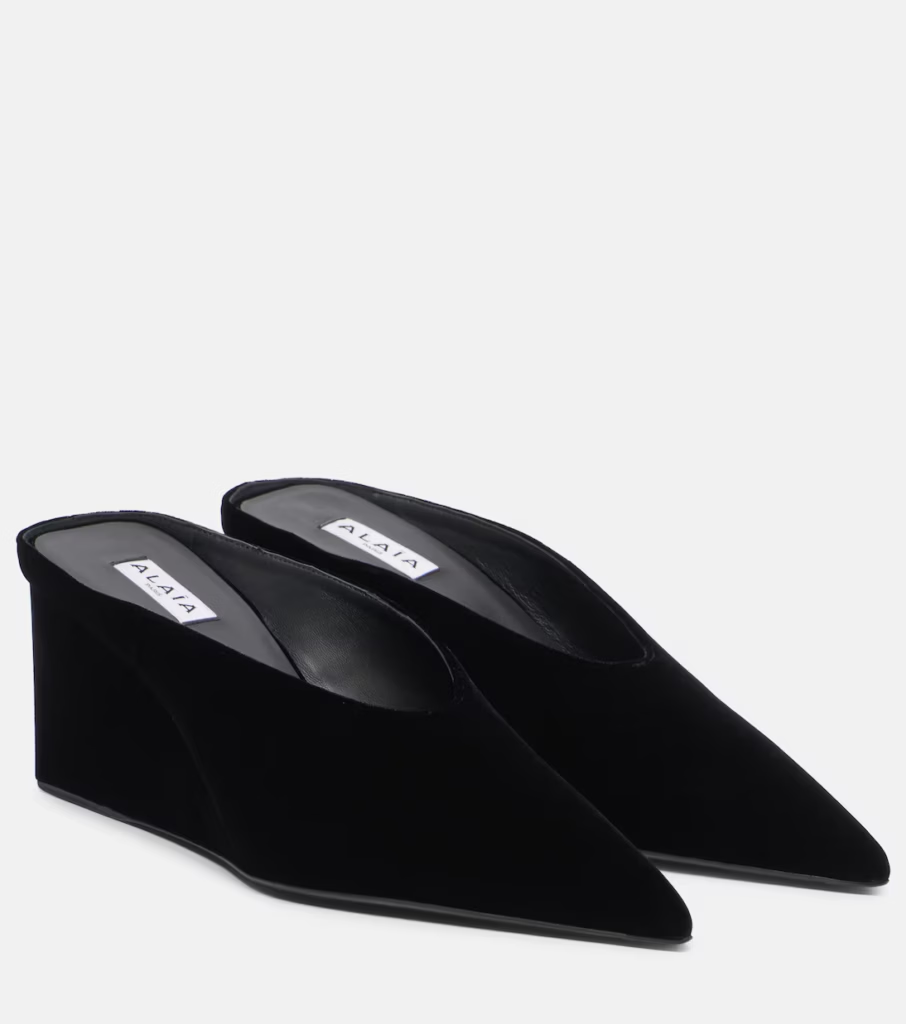
Cube Velvet Wedge Mules

For a more tactile, elevated look, Cube Velvet Wedge Mules introduce texture without excess. Velvet adds depth and richness, making these mules ideal for evening wear or colder seasons while still maintaining a minimalist aesthetic.

Cube 75 velvet wedge mules

They pair beautifully with monochrome outfits and soft tailoring.


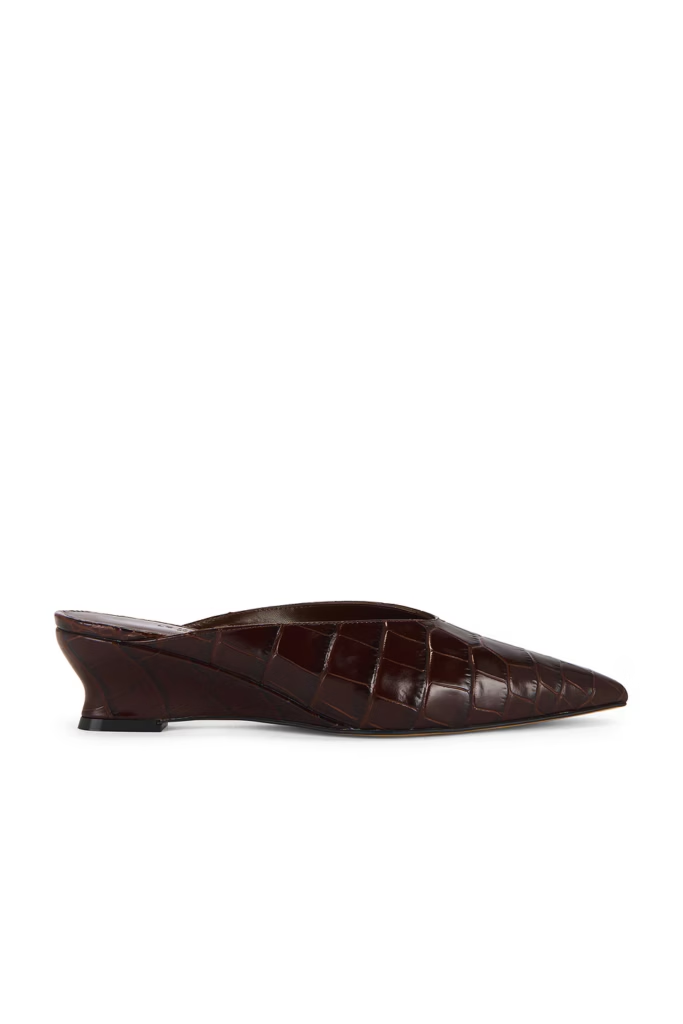
Victoria Micro Wedge Mule

The Victoria Micro Wedge Mule represents the most modern direction of the trend. Featuring a subtle, lower wedge, this style prioritizes comfort and wearability while maintaining a sleek silhouette.

Victoria Micro Wedge Mule

Ideal for long days, travel, and understated everyday outfits.


Siena Mule Pumps

Both Siena Mule Pumps and the Siena Mule Pump silhouette reflect classic design with a modern update. Clean lines, balanced proportions, and a closed toe make this style versatile enough for work, dinners, and transitional seasons.

Siena Mule Pump
Siena Mule Pump

They feel timeless rather than trendy—exactly what defines successful modern footwear.


Patent Wedge Heels

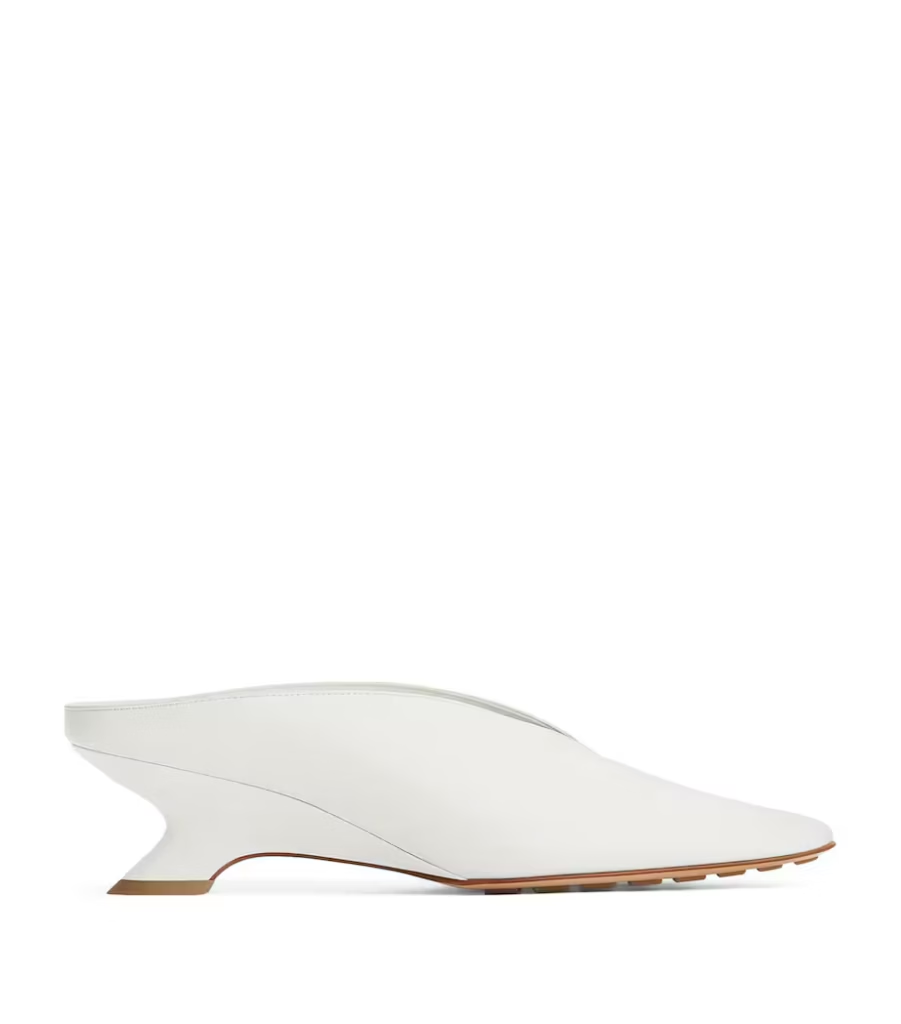
For those who prefer a statement finish, Patent Wedge Heels offer shine without drama. The patent surface adds polish, while the wedge heel keeps the look grounded and wearable.

Bottega Veneta
Patent Leather Wedge Mules

Best styled with minimalist outfits where the shoe becomes the focal point.


Women’s Jet Mules

Women’s Jet Mules bring a streamlined, contemporary edge to the closed-toe wedge mules trend. Often featuring darker tones and sleek materials, they work well with tailored looks and structured silhouettes.

Vinyl Jet Mules 50
Vinyl Jet Mules 50

They’re especially effective in capsule wardrobes built around neutral palettes.


Annie Wedge Closed-Toe Shoes

The Annie Wedge Closed Toe Shoes embody everything this trend stands for: comfort, elegance, and practicality. With a classic closed toe and supportive wedge, this style transitions effortlessly from day to night.

An excellent option for those seeking one dependable, everyday wedge mule.


How Fashion Editors Are Styling Closed-Toe Wedge Mules

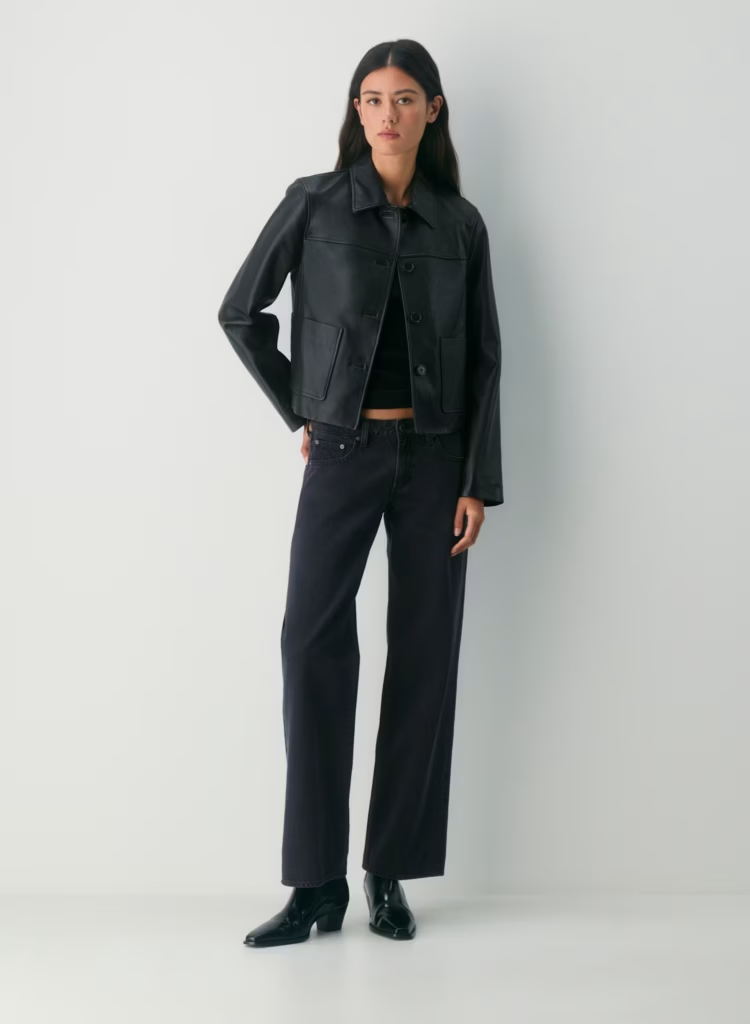
Editors are keeping styling simple to let the shoe do the work.

Popular pairings include:

  • Tailored trousers and fine knits
  • 90s straight-leg jeans and structured blazers
  • Midi skirts with minimal tops
  • Monochrome outfits that highlight shoe shape

The goal is balance—clean silhouettes that feel intentional and modern.


Closed-Toe Wedge Mules vs Traditional Heels

Compared to stilettos or classic pumps, closed-toe wedge mules offer:

  • Better weight distribution
  • Increased comfort for long wear
  • A more relaxed, modern aesthetic

This is why they’re becoming the preferred choice for women who want style that supports their lifestyle.


Why This Trend Has Longevity

The closed-toe wedge mules trend isn’t driven by novelty—it’s driven by function and form. These shoes meet real needs while aligning with current luxury aesthetics.

They are:

  • Seasonally flexible
  • Easy to style
  • Comfortable without compromising elegance

That combination gives them staying power beyond one season.


Final Thoughts

The closed-toe wedge mules trend reflects where fashion is headed: thoughtful, refined, and wearable. From Women’s Pointed Wedge Pumps to Siena Mule Pumps, Victoria Micro Wedge Mules, and Annie Wedge Closed Toe Shoes, this category offers options for every style preference—without sacrificing comfort.

If you’re updating your footwear wardrobe, this is a trend worth embracing now—and wearing for years to come.

Retail therapy in 2026 has evolved. It’s no longer about trend overload, impulse carts, or seasonal must-haves that lose relevance within months. Instead, retail therapy 2026 shopping is rooted in intention—choosing fashion pieces that deliver emotional comfort, timeless style, and lasting value.

This year’s most satisfying purchases are grounded in quiet luxury, elevated basics, and silhouettes that feel familiar yet refined. Think pieces that calm the wardrobe, not clutter it. Items you reach for instinctively—because they feel good, look polished, and work effortlessly across seasons.

Welcome to the new era of retail therapy—where luxury is subtle, wearable, and deeply personal.


What Retail Therapy Means in 2026

In 2026, fashion buyers are prioritizing longevity over novelty. The most searched shopping edits reflect a desire for:

  • High-quality fabrics like cashmere and leather
  • Comfortable yet elegant footwear
  • 90s-inspired denim and tailoring
  • Neutral palettes that mix effortlessly
  • Accessories that anchor an entire wardrobe
Perfect cashmere cable-knit crewneck sweater in stripe
cashmere cable-knit crewneck sweater
Madewell Women's Ciel Kitten Heel Glove Bootie-Suede Ankle Boot
Kitten Heel Glove Bootie-Suede Ankle Boot
Denim Forum The '90s Super Lo-Rise Baggy Jean
Denim Forum The ’90s Super Lo-Rise Baggy Jean

Retail therapy today is less about “what’s trending” and more about how a piece makes you feel—confident, grounded, and put together.

This shift is why investment fashion is dominating both Google Discover and Pinterest saves.


Cashmere: The Ultimate Retail Therapy Purchase

If retail therapy had a fabric, it would be cashmere.

Cashmere remains the most emotionally rewarding fashion purchase in 2026. Soft, breathable, and timeless, it offers comfort without compromising polish.

Cashmere pieces worth investing in:

  • Cashmere turtleneck sweater
  • Relaxed cashmere crewneck
  • Lightweight cashmere layering knit
The Cashmere Oversized Turtleneck

A cashmere turtleneck paired with 90s jeans or tailored trousers instantly elevates an outfit. It’s effortless luxury—no styling tricks required.


https://assets.vogue.com/photos/645a5a0a3afb62e042529c75/master/w_2560%2Cc_limit/CASHMERE-MAY23-VOGUEBUS_STORY.jpg

The Turtleneck Sweater Is Back (and Better)

The turtleneck sweater has reclaimed its place as a luxury essential in 2026. No longer just a layering piece, it now stands confidently on its own.

Style it with:

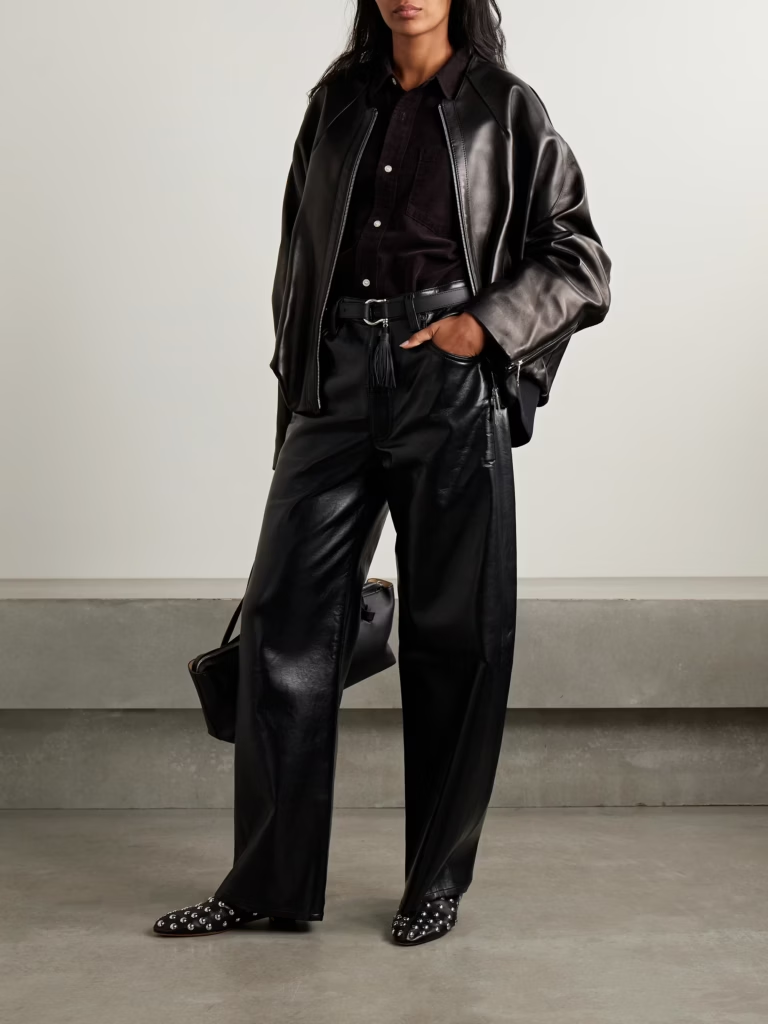
  • Baggy recycled-leather wide-leg pants
  • Lace midi skirts
  • 90s straight-leg jeans
Ayla Baggy recycled-leather wide-leg pants
Lace Midi Skirt
Lace Midi Skirt
Joe's Jeans The 90's Niki High-Rise Straight-Leg Jeans
Joe’s Jeans The 90’s Niki High-Rise Straight-Leg Jeans

This silhouette delivers understated authority—perfect for modern wardrobes built around simplicity and strength.


Faux Fur & Double-Faced Coats: Where Retail Therapy Peaks

Outerwear is where retail therapy feels most indulgent—and most visible.

In 2026, two coat styles dominate luxury shopping edits:

Faux Fur Coats

Plush, oversized, and neutral-toned, faux fur coats bring softness and drama without excess. They elevate even the simplest outfit.

Double-Faced Wool Coats

Clean, structured, and beautifully tailored, double-faced coats offer warmth without bulk. They’re the definition of quiet luxury outerwear.

Both styles photograph exceptionally well, making them ideal for Discover feeds and Pinterest pins.


https://m.media-amazon.com/images/I/71XraoFXLSL._AC_UY1000_.jpg

90s Jeans: Still the Foundation of Modern Luxury

Trends may rotate, but 90s jeans remain the backbone of a polished wardrobe in 2026.

Characterized by:

  • Straight or relaxed legs
  • High-rise waistlines
  • Minimal distressing

They ground luxury pieces and create balance when styled with:

  • Cashmere knits
  • Faux fur or wool coats
  • Loafers, ankle boots, or knee-high boots
Wyeysyt Womens Faux Fur Coat Long Fluffy Shaggy Jacket Lapel Winter Furry Coats Fuzzy Outerwear
Faux Fur Coat
Sima shearling coat
Sima shearling coat
Women's Genuine Leather Penny Loafers Classic Driving Moccasins Casual Slip On Comfort Women Loafer Shoes
Leather Penny Loafers

A great pair of 90s jeans makes every outfit feel intentional.


Footwear That Defines Retail Therapy 2026 Shopping

Shoes are no longer impulse buys—they’re considered investments. Retail therapy 2026 shopping favors comfort-forward luxury footwear that transitions seamlessly from day to night.

Key footwear styles to buy now:

  • Classic leather loafers with refined soles
  • Ankle boots with clean silhouettes
  • Knee-high boots in smooth leather
  • UGG Classic Micro for off-duty styling
  • Samba Jane sneakers for polished casual wear
Adidas Samba Jane Sneakers
UGG Classic Micro
UGG Classic Micro

These styles dominate Pinterest saves because they’re wearable, versatile, and timeless.


4

Shoulder Bags & Quiet Luxury Icons

Accessories remain the fastest way to elevate a wardrobe, and in 2026, shoulder bags continue to lead luxury searches.

Minimal branding, sculptural shapes, and neutral leathers define the category. One standout remains the The Row leather bag—still a gold standard for understated luxury.

E/W India leather shoulder bag

A well-chosen shoulder bag anchors denim, tailoring, knits, and outerwear with ease.


Lace Midi Skirts: Soft Power Dressing

The lace midi skirt has emerged as one of the most unexpected heroes of retail therapy 2026 shopping.

Why it works:

  • Adds softness to structured outfits
  • Creates contrast with knits and boots
  • Feels romantic yet modern

Pair a lace midi skirt with a turtleneck sweater and knee-high boots for a look that feels editorial but wearable.


Women's Midi Lace Ruffle Skirt

Midi Lace Ruffle Skirt

Baggy Recycled-Leather Wide-Leg Pants

Luxury in 2026 is also conscious.

Baggy recycled-leather wide-leg pants reflect the shift toward sustainability without sacrificing style. They offer texture, edge, and polish in one statement piece.

Style them with:

  • Cashmere knits
  • Loafers or ankle boots
  • Structured coats

They’re bold yet timeless—ideal for fashion-forward retail therapy purchases.


Sunglasses: The Smallest Luxury with the Biggest Impact

Sunglasses remain one of the most satisfying low-commitment retail therapy buys.

In 2026, look for:

  • Oversized neutral frames
  • Soft rectangular or oval shapes
  • Minimal logos
oval sunglasses Vintage small round frame comfy glasses shade mirror
oval sunglasses

They instantly elevate denim-and-knit outfits and photograph beautifully—perfect for social and Discover visibility.


Why These Pieces Define Retail Therapy in 2026

The most successful retail therapy purchases this year share three qualities:

  1. Emotional comfort – they feel good to wear
  2. Styling versatility – they work across outfits
  3. Longevity – they won’t date next season

Luxury today is calm, intentional, and wearable. These pieces don’t shout—they whisper confidence.


How to Shop Retail Therapy the Smart Way in 2026

Before investing, ask yourself:

  • Can I style this at least three ways?
  • Does it complement my existing wardrobe?
  • Will I still love this in two years?

If the answer is yes, it’s a retail therapy purchase worth making.


Final Thoughts

Retail therapy 2026 shopping isn’t about excess—it’s about considered indulgence. A cashmere sweater that feels like a hug. A leather bag that anchors every outfit. Boots that quietly elevate your look.

Luxury has shifted.
It’s softer now.
More thoughtful.
And designed to last.

Alpine style is the fashion world’s answer to winter dressing that feels effortless, elevated, and enduring. Inspired by European mountain life, luxury ski culture, and chalet living, alpine style blends warmth with refinement—making it just as wearable in the city as it is in the Alps.

At She Travels Chic, we love alpine fashion for its quiet luxury aesthetic: neutral tones, structured layers, rich textures, and pieces that feel timeless rather than trendy.


What Defines Alpine Style Fashion?

Alpine style is built on a few core principles:

  • Neutral, earthy color palettes
  • Premium fabrics (wool, cashmere, shearling)
  • Structured outerwear
  • Functional yet polished footwear
  • Minimal, intentional accessories

Think: Parisian polish meets mountain practicality.


Alpine style winter outfit featuring a neutral wool coat, knitwear, and leather boots

Key Alpine Style Pieces to Build a Chic Winter Wardrobe

1. Elevated Knitwear (The Foundation)

Knitwear is the heart of alpine style. Opt for pieces that feel luxurious but effortless.

Shop Alpine Knitwear

  • Cashmere or wool cable-knit sweater
  • Ribbed turtleneck in cream, taupe, or black
  • Relaxed knit sets for travel days
Alys Fairisle Knit Jacket

Cream Ribbed Holden Turtleneck
Ribbed Holden Turtleneck
Knitted Outfits 2 Pieces Sweatsuit Off the Shoulder Sweater Wide Leg Pant Set
Knitted Outfits 2 Pieces Sweatsuit

2. Timeless Alpine Outerwear

Your coat sets the entire tone of an alpine outfit.

Must-have alpine coats

  • Long wool coat (camel, grey, or black)
  • Belted wrap coat
  • Quilted jacket with clean lines
  • Faux-fur or shearling jacket
Winter Coat Long Wool Pea Coat Double Breasted Coat Classic Notched Lapel Jackets Trench Coat Outwear
Winter Coat Long Wool Pea Coat
Wool Blend Belted Wrap Coat
Kate Spade New York Midweight Hooded A-Line Quilted Jacket
Faux-Shearling Jacket

Style tip: Size up slightly for elegant layering.


Alpine style winter outfit featuring a neutral wool coat, knitwear, and leather boots

3. Chic Yet Practical Footwear

Alpine style favors boots that are walkable, weather-ready, and stylish.

Best alpine boots to shop

  • Leather ankle boots with lug soles
  • Knee-high leather boots
  • Minimal après-ski boots
Bottega Veneta The Lug Leather Ankle Boots

Women's Icon Low Boots moon boot
moon boot
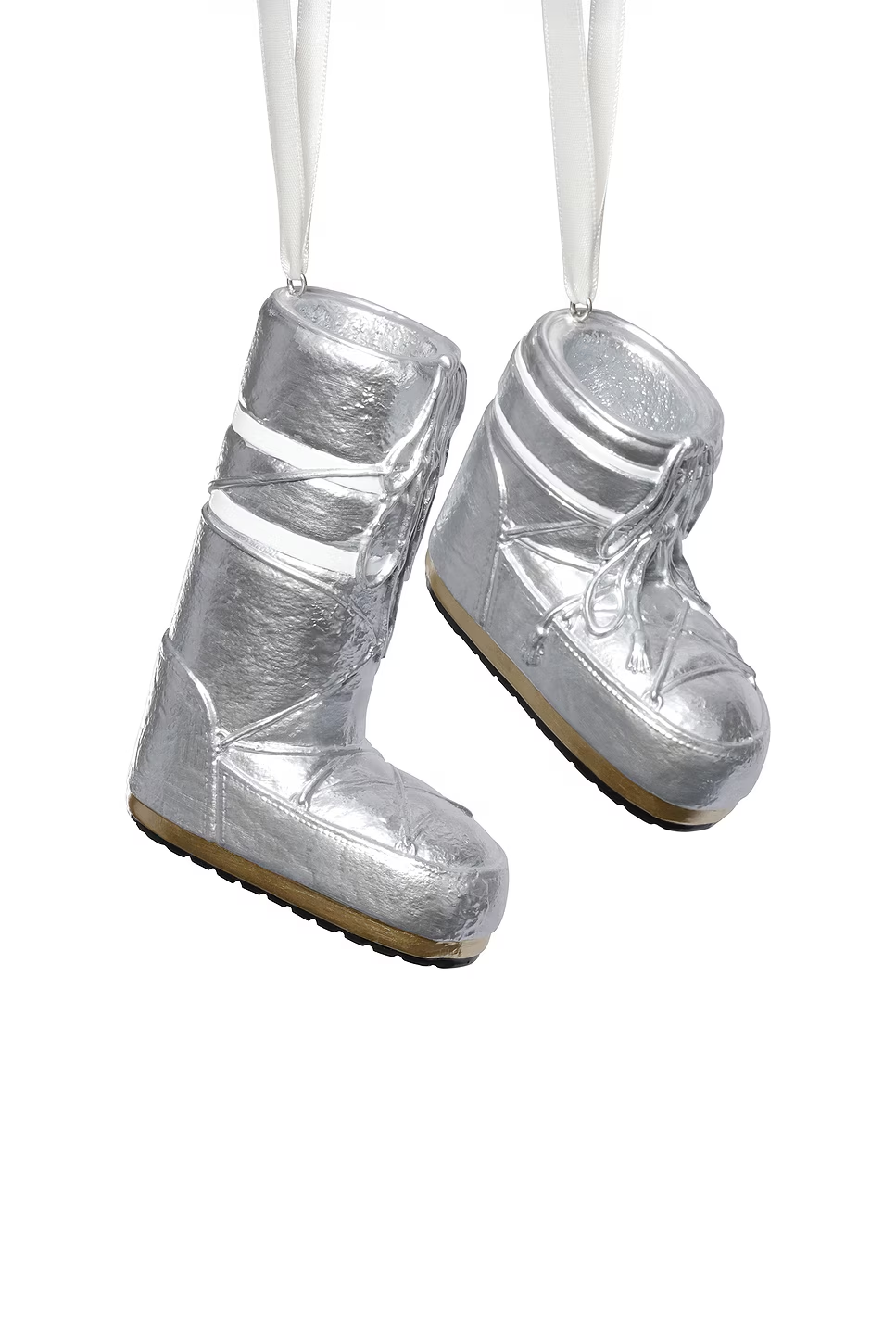
Apres Ski Boots Set Of 2 in Metallic Silver.
Apres Ski Boots
APRES CHIC BOOTS - Fendi - Woman
APRES CHIC BOOTS

These styles pair effortlessly with trousers, knits, and winter dresses.


4. Accessories That Complete the Look

Accessories in alpine fashion are understated but intentional.

Alpine accessory essentials

  • Oversized wool scarf
  • Leather gloves
  • Structured tote or crossbody bag
  • Minimal gold or silver jewelry
Harssidanzar Leather Gloves For Women's,Womens Leather Gloves Winter Warm Cashmere Lining Touchscreen Vintage Finished
Harssidanzar Leather Gloves
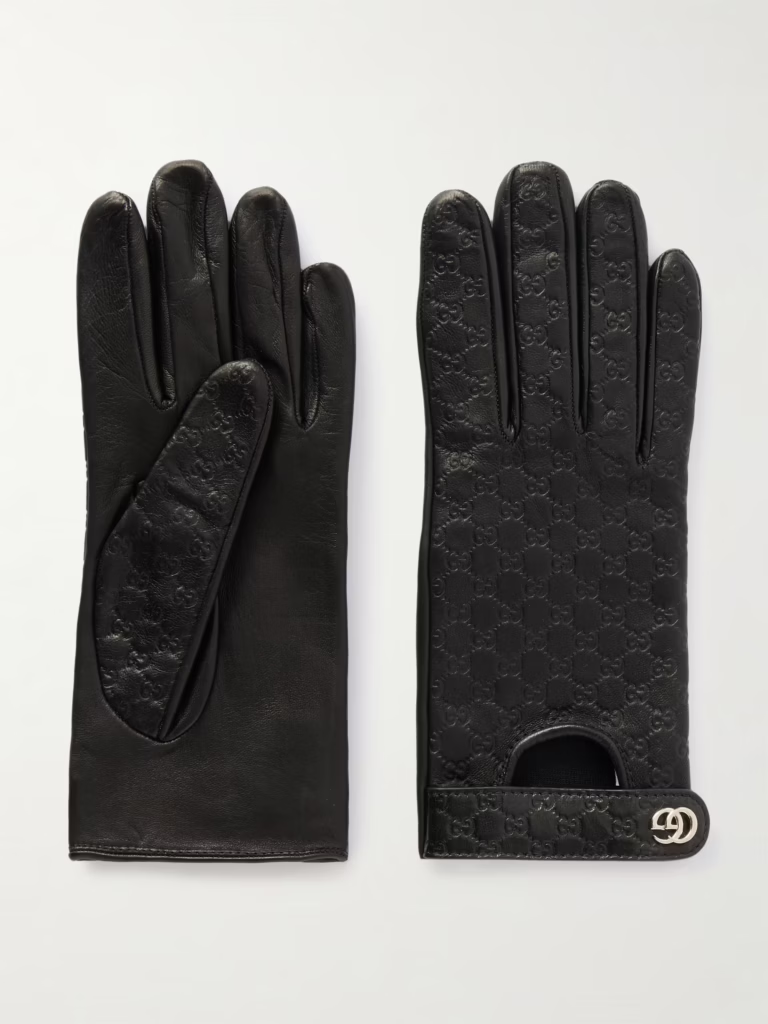
Debossed leather gloves

Less is more—every piece should feel considered.


Alpine style winter outfit featuring a neutral wool coat, knitwear, and leather boots

Alpine Style Outfit Ideas (City-to-Mountain)

Alpine Everyday Chic

  • Cream cable-knit sweater
  • Tailored wool trousers
  • Long camel coat
  • Leather ankle boots
  • Neutral scarf

Perfect for city walks, cafés, and casual meetings.


Alpine Après-Ski Inspired Look

  • Fitted turtleneck
  • Shearling or faux-fur jacket
  • Dark straight-leg jeans
  • Knee-high boots
  • Oversized sunglasses

Effortless and editor-approved.


Alpine Travel Outfit

  • Matching knit set or knit dress
  • Belted long coat
  • Flat leather boots
  • Structured tote

Comfortable, polished, and ideal for winter travel.


SHOP THE ALPINE STYLE EDIT (AFFILIATE SECTION)

Alpine Style Shopping List

Knitwear

  • Neutral cable-knit sweater
  • Cashmere turtleneck
  • Ribbed knit dress

Outerwear

  • Long wool coat
  • Quilted jacket
  • Shearling jacket

Shoes

  • Lug-sole ankle boots
  • Knee-high leather boots
  • Après-ski boots

Accessories

  • Wool scarf
  • Leather gloves
  • Structured tote bag

Why Alpine Style Is Worth Investing In

Alpine style isn’t seasonal—it’s timeless. These pieces work year after year, across destinations, climates, and occasions. When you invest in alpine fashion, you’re building a wardrobe that always looks intentional, elegant, and expensive.

Azelaic acid isn’t loud.
It doesn’t tingle.
It doesn’t promise overnight miracles.

And that’s exactly why it’s becoming one of the most searched and recommended skincare ingredients right now.

If you’ve struggled with redness, texture, breakouts, or post-acne marks — but your skin doesn’t tolerate harsh actives — azelaic acid might be the ingredient your routine has been missing.

This is your complete guide to the best azelaic acid products — what they do, who they’re for, and which formulas are actually worth buying.


Why Azelaic Acid Is Everywhere Right Now

Azelaic acid has quietly moved from dermatologist offices into everyday skincare routines — and for good reason.

Unlike exfoliating acids that focus on surface-level glow, azelaic acid works deeper and more gently, targeting multiple skin concerns at once without compromising the skin barrier.

It’s especially popular because it:

  • Helps calm redness and inflammation
  • Improves acne and congestion
  • Fades post-acne marks and uneven tone
  • Smooths texture over time
  • Is generally well tolerated by sensitive skin

In other words, it does a lot — without drama.


What Exactly Is Azelaic Acid?

Azelaic acid is a naturally occurring acid derived from grains like wheat and barley. In skincare, it’s used in concentrations that help regulate cell turnover, reduce bacteria on the skin, and calm inflammation.

What makes it different from AHAs or BHAs is that it doesn’t aggressively exfoliate. Instead, it works gradually — improving clarity and tone without irritation.

That’s why dermatologists often recommend it for:

  • Adult acne
  • Rosacea-prone skin
  • Sensitive or reactive skin
  • Hyperpigmentation and dark spots

The Skin Benefits of Azelaic Acid

✔ Calms Redness and Sensitivity

Azelaic acid has anti-inflammatory properties, making it ideal for skin that flushes easily or reacts to stronger actives.

✔ Helps Clear Acne (Without Stripping)

It targets acne-causing bacteria while helping regulate excess oil — without drying the skin.

✔ Fades Dark Spots and Marks

With consistent use, azelaic acid helps even skin tone and soften the look of post-acne marks and pigmentation.

✔ Smooths Texture Over Time

Rather than exfoliating aggressively, it encourages healthier skin renewal gradually.


The Best Azelaic Acid Products (Editor-Approved)

Below are the best azelaic acid products based on formula quality, effectiveness, and real-world usability.


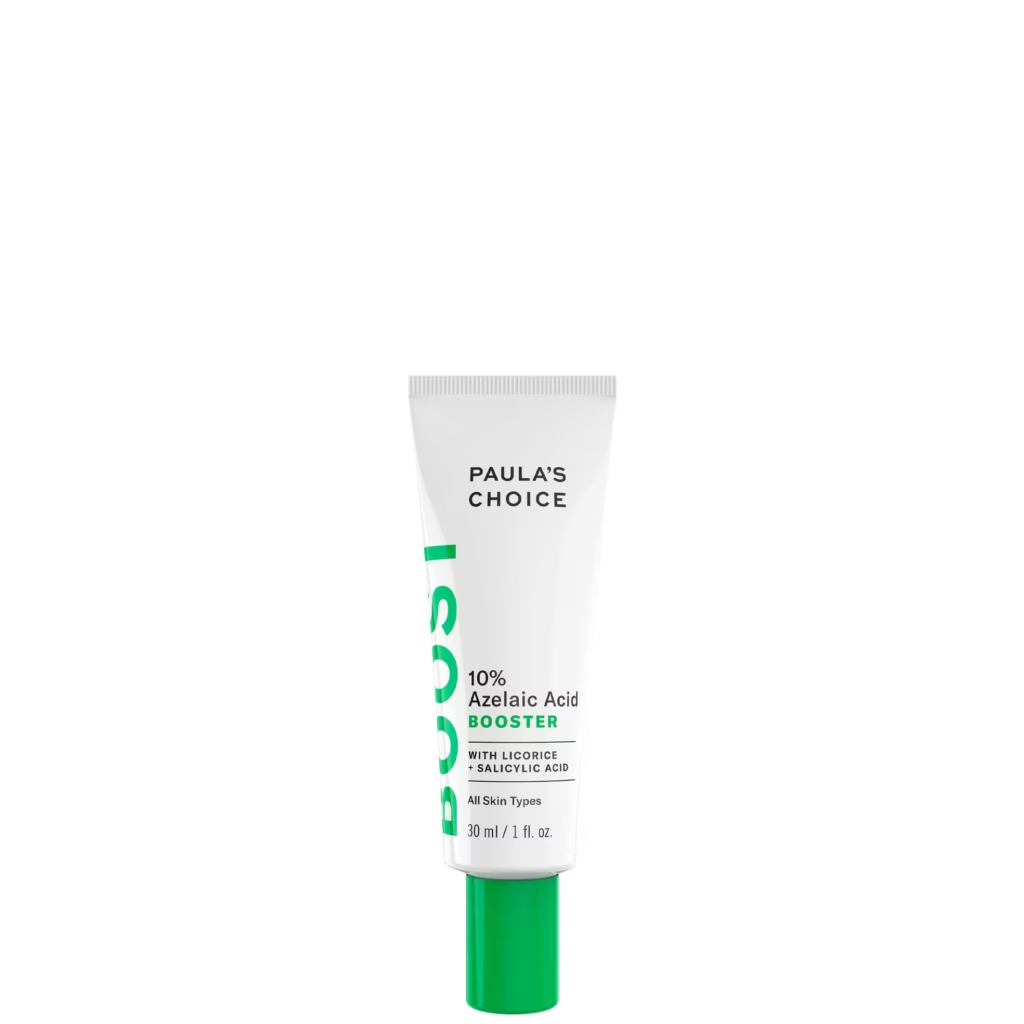
Paula’s Choice 10% Azelaic Acid Booster

Paula's Choice 10 Azelaic Acid Booster
Paula’s Choice 10 Azelaic Acid Booster

Best overall azelaic acid product

This is one of the most trusted azelaic acid formulas on the market — lightweight, effective, and beautifully formulated.

Why it stands out:

  • 10% azelaic acid concentration
  • Includes salicylic acid and licorice extract
  • Smooths texture and brightens tone
  • Can be mixed into moisturiser or used alone

Best for: acne, uneven texture, post-breakout marks
Texture: lightweight cream-gel
Affiliate note: Excellent conversion product due to brand trust


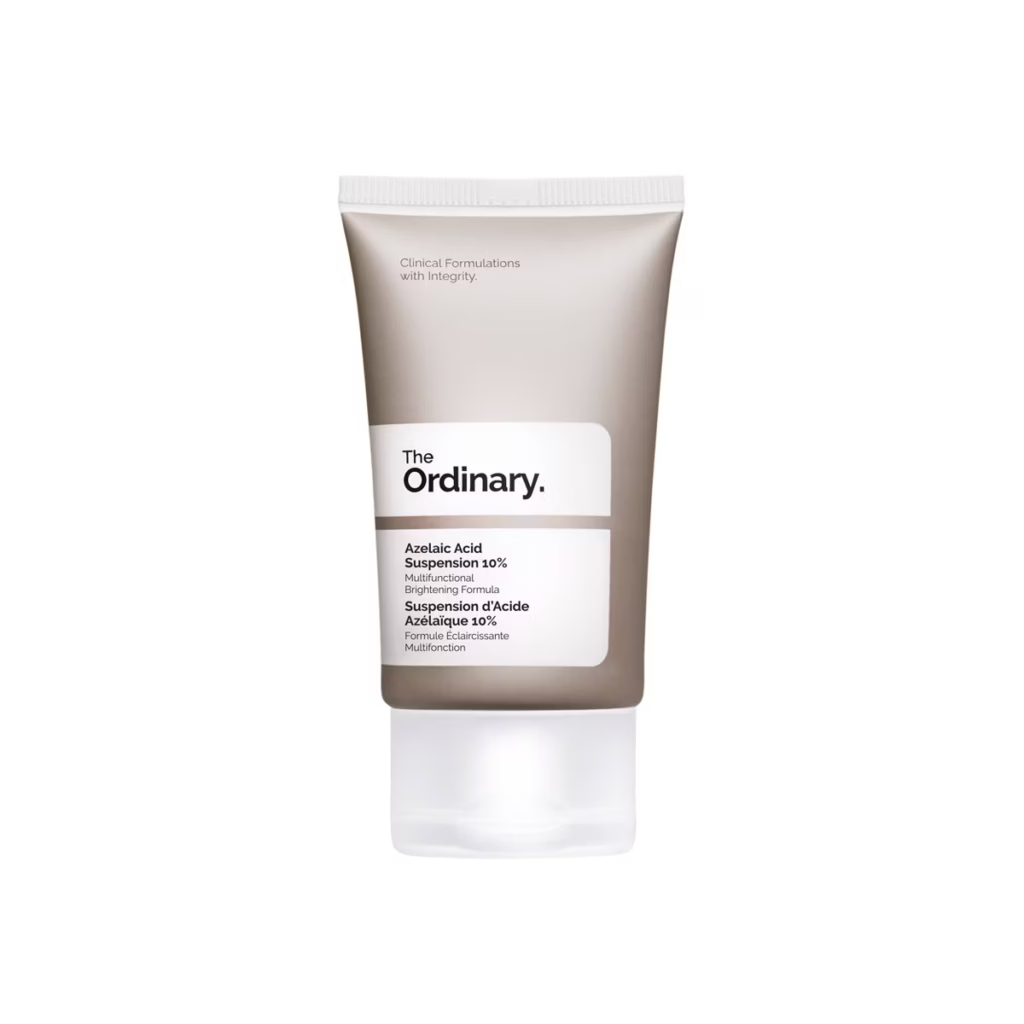
The Ordinary Azelaic Acid Suspension 10%

The Ordinary Azelaic Acid Suspension 10% Cream

Best budget azelaic acid

Affordable and effective, this cult favourite delivers results at a low price point — making it ideal for beginners.

Why people love it:

  • High concentration at a low cost
  • Helps reduce redness and breakouts
  • Great introduction to azelaic acid

Things to note:
The texture is thicker and more silicone-based, which some people may not love.

Best for: beginners, budget shoppers
Texture: matte cream


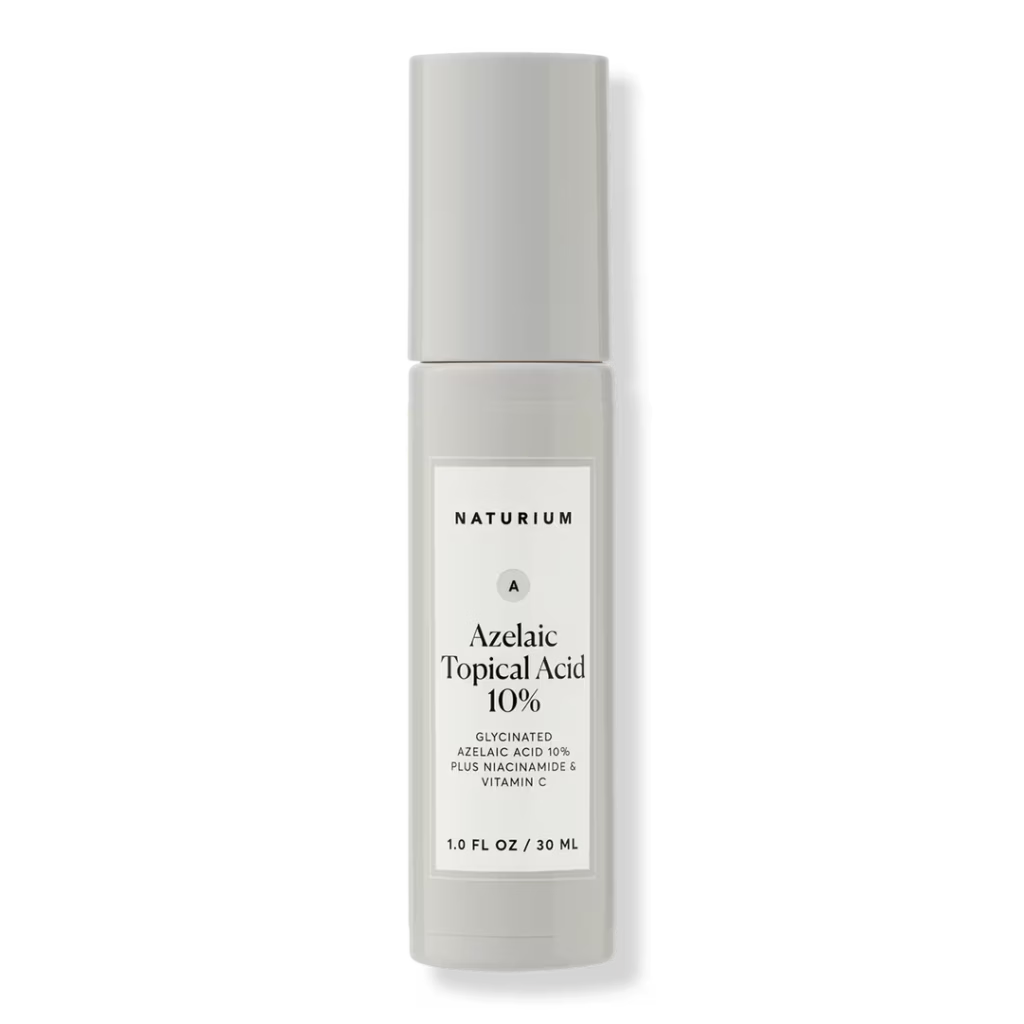
Naturium Azelaic Topical Acid 10%

Azelaic Topical Acid 10%

Best for sensitive skin

This formula is designed for daily use and feels more like a serum than a treatment.

Why it’s a standout:

  • Azelaic acid + niacinamide + vitamin C derivatives
  • Gentle, soothing, and hydrating
  • Layers beautifully under moisturiser and SPF

Best for: redness-prone or sensitive skin
Texture: lightweight serum


Drunk Elephant Azelaic Acid Serum

Best luxury azelaic acid option

A polished, skin-barrier-friendly formula that fits seamlessly into a minimalist routine.

Why it works:

  • Azelaic acid combined with soothing antioxidants
  • No fragrance or essential oils
  • Elegant texture and packaging

Best for: sensitive skin with texture or dullness
Texture: silky serum


How to Use Azelaic Acid in Your Routine

Azelaic acid is flexible — but placement matters.

Morning Routine

  1. Gentle cleanser
  2. Azelaic acid (thin layer)
  3. Moisturiser
  4. SPF (essential)

Evening Routine

  1. Cleanser
  2. Azelaic acid
  3. Hydrating serum (optional)
  4. Moisturizer

Pro tip:
Azelaic acid pairs well with:

  • Niacinamide
  • Hyaluronic acid
  • Vitamin C (gentle formulas)

Avoid using it at the same time as strong exfoliating acids until your skin adjusts.


How Often Should You Use Azelaic Acid?

  • Beginner: every other day
  • Tolerant skin: once daily
  • Sensitive skin: 2–3 times per week at first

Consistency matters more than frequency.


Who Should Use Azelaic Acid?

Azelaic acid is especially beneficial if you have:

  • Adult acne
  • Redness or rosacea-type sensitivity
  • Post-acne marks
  • Uneven texture or tone
  • Skin that reacts to stronger actives

It’s one of the most universally tolerated actives — which is why it continues to trend.


Common Mistakes to Avoid

  • Using too much product
  • Expecting overnight results
  • Skipping sunscreen
  • Layering with too many actives at once

Azelaic acid works quietly — give it time.


Results: What to Expect (Realistically)

  • 2–3 weeks: calmer skin, less redness
  • 4–6 weeks: smoother texture, fewer breakouts
  • 8–12 weeks: brighter, more even tone

Slow results are stable results.


Final Thoughts

Azelaic acid is not a trend — it’s becoming a skincare essential.

If you want clearer, calmer skin without compromising your barrier, it’s one of the smartest ingredients you can add to your routine.

The products above offer options at every price point — and each one delivers results with consistency and care.

Quiet skincare. Real results.

Sensitive skin doesn’t need aggressive formulas, loud claims, or “miracle” ingredients.

It needs calm.
Consistency.
And a cleanser that does its job quietly.

If your skin ever feels tight, red, or irritated after washing your face, chances are it’s not your skin — it’s your cleanser.

This edit is about face washes that respect sensitive skin, not punish it.


What Sensitive Skin Really Needs From a Cleanser

Let’s simplify it.

A good face wash for sensitive skin should:

  • Clean without stripping
  • Support your skin barrier
  • Leave your face feeling comfortable
  • Never sting, burn, or tighten

If your cleanser makes your skin feel squeaky, that’s not “clean” — that’s over-cleansed.


Ingredients That Calm (and the Ones to Skip)

Look for:

  • Ceramides
  • Glycerin
  • Hyaluronic acid
  • Panthenol (B5)
  • Squalane
  • Colloidal oatmeal

These help your skin stay balanced and resilient.

Skip:

  • Fragrance (even essential oils)
  • Alcohol denat
  • Harsh foaming agents
  • Exfoliating acids in cleansers

Sensitive skin thrives on less.


The Best Face Washes for Sensitive Skin

These are gentle, effective, and trusted — whether you wear makeup daily or keep things minimal.


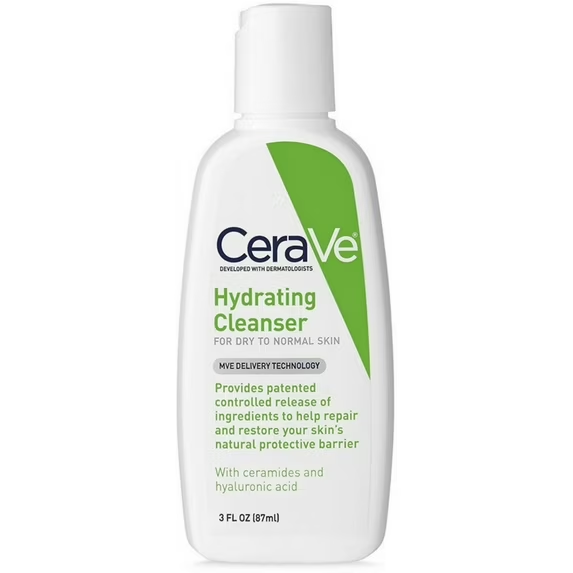
CeraVe Hydrating Cleanser

CeraVe Hydrating Cleanser

The everyday, no-drama cleanser

This is the one dermatologists recommend again and again — and for good reason.

It’s creamy, non-foaming, and packed with ceramides that help repair the skin barrier while you cleanse.

Best for: dry, sensitive, or compromised skin
Texture: creamy, comforting
Why it works: cleans without stripping — ever

This is the cleanser you can use morning and night without thinking twice.


La Roche-Posay Toleriane Hydrating Gentle Cleanser

La Roche-Posay Toleriane Hydrating Gentle Face Cleanser + Lipikar AP+ Triple Repair

For redness-prone or reactive skin

If your skin reacts easily, this one feels like a reset.

Minimal ingredients, soothing thermal water, and a formula that focuses on calming — not correcting.

Best for: redness, rosacea-prone skin
Texture: soft, lotion-like
Why it works: barrier-focused and ultra-gentle

Perfect when your skin feels stressed or sensitised.


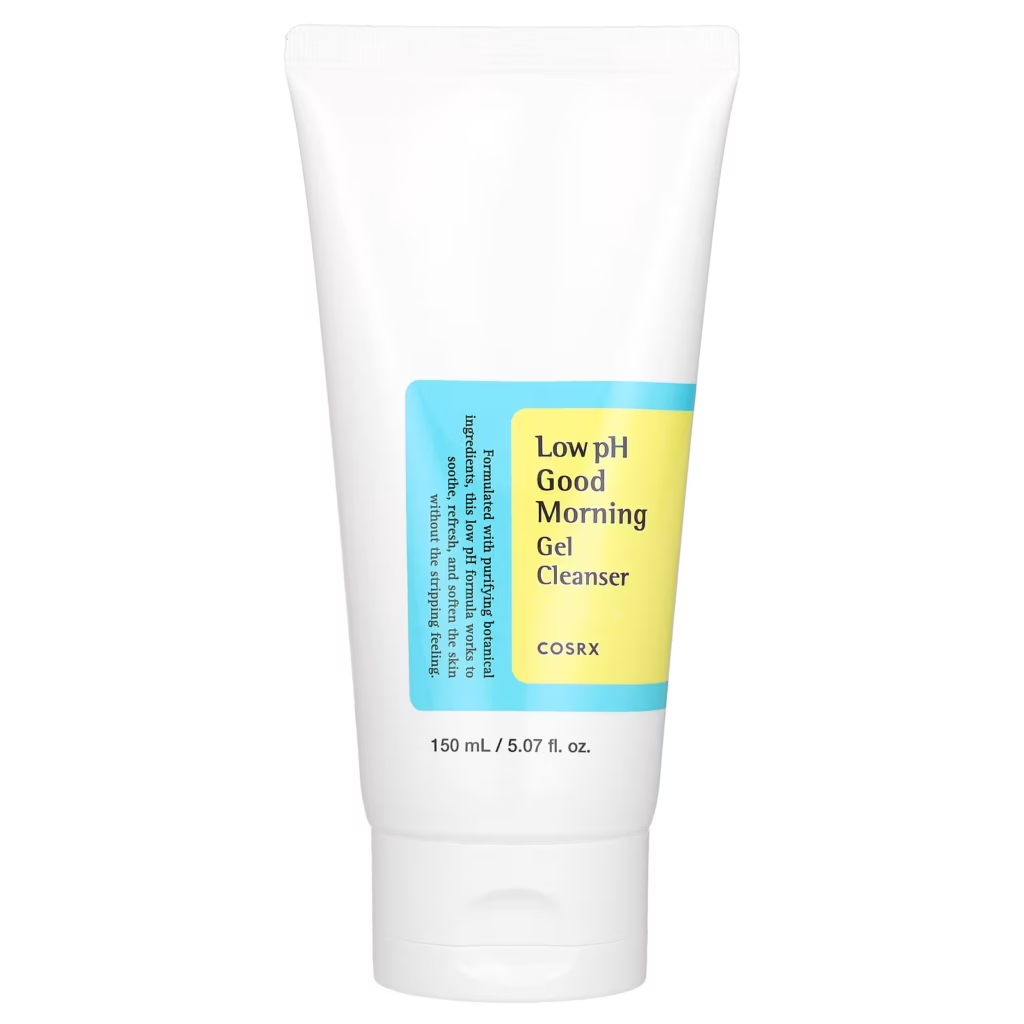
COSRX Low pH Good Morning Gel Cleanser

CosRx, Low pH Good Morning Gel Cleanser

The gentle gel option

If you prefer a gel cleanser but still need something mild, this is a standout.

Low pH, light gel texture, and no harsh foam — it cleans effectively without disrupting your skin’s balance.

Best for: combination or sensitive skin
Texture: light gel
Why it works: balances without strippin

Ideal as a morning cleanse or second cleanse.


The Ordinary Squalane Cleanser

The Ordinary Squalane Cleanser

The makeup-melting essential

This balm-to-oil cleanser removes makeup, SPF, and grime without friction.

It rinses clean but leaves skin feeling soft — never tight.

Best for: makeup wearers
Texture: balm that melts into oil
Why it works: dissolves makeup gently

Use this as your first cleanse, followed by a gentle wash.


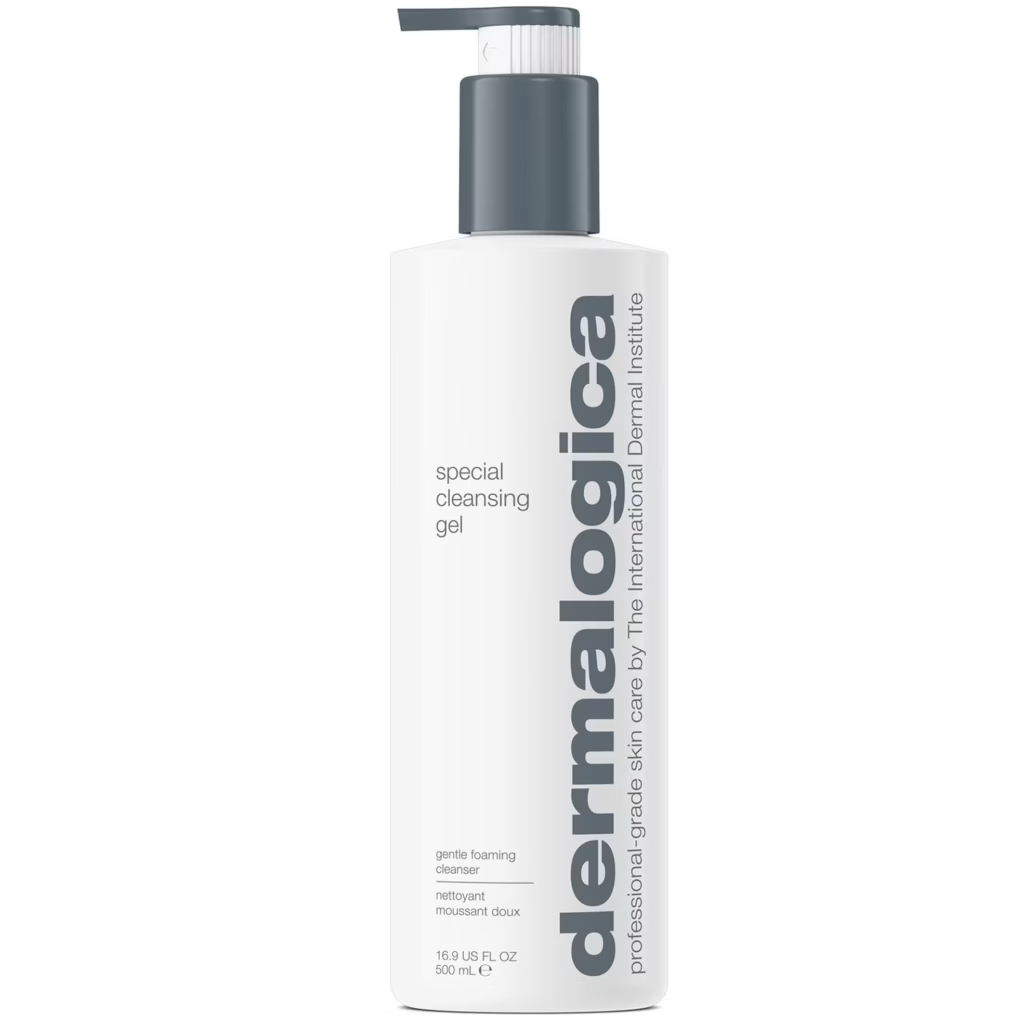
Dermalogica Special Cleansing Gel

Dermalogica Special Cleansing Gel

The professional favorite

Despite the name, this gel cleanser is surprisingly gentle and widely used by estheticians.

It gives a slightly deeper clean while still respecting sensitive skin.

Best for: sensitive + combination skin
Texture: clear gel, light foam
Why it works: effective without over-cleansing

Great if you want something clean-feeling but still kind to skin.


How to Wash Sensitive Skin (Without Making It Angry)

Technique matters more than people think.

  • Use lukewarm water
  • Massage gently with fingertips
  • Cleanse for 30–40 seconds
  • Pat dry — never rub
  • Moisturize immediately

If your skin stings during cleansing, stop. That cleanser isn’t for you.


Choosing the Right Cleanser for Your Skin

  • Dry or flaky: cream cleansers (CeraVe, La Roche-Posay)
  • Redness-prone: minimalist, soothing formulas
  • Makeup wearer: balm or oil first, gentle cleanser second
  • Combination skin: low-pH gel cleansers

There’s no one-size-fits-all — only what your skin tolerates well.


Common Mistakes That Keep Sensitive Skin Irritated

  • Over-cleansing
  • Switching products too often
  • Using hot water
  • Skipping moisturizer after cleansing
  • Chasing “active” ingredients

Sensitive skin doesn’t need more — it needs consistency.


A Simple Routine That Works

Morning

  • Gentle cleanser
  • Hydrating serum
  • Moisturizer
  • SPF

Evening

  • Squalane or balm cleanser (if wearing makeup/SPF)
  • Gentle cleanser
  • Barrier-supporting moisturizer

That’s it. No 10-step routine required.


Final Thoughts

Your face wash should never feel like a risk.

The right cleanser makes your skin feel calm, comfortable, and balanced — not tight or irritated.

If you’re dealing with sensitive skin, start here.
Gentle cleansing changes everything.

Many women move through life with a quiet sense of urgency—like they’re always catching up, falling short, or missing something important. Even when they’re productive, capable, and doing “enough,” the feeling of being behind never fully disappears.

But there is another way to live.

Women who don’t constantly feel behind aren’t more organized, luckier, or less busy. They think differently. They practice specific mental habits that create steadiness, clarity, and emotional security—even in demanding seasons of life.

This article explores the mindset for women who feel grounded instead of rushed, focused instead of scattered, and present instead of perpetually chasing the next thing.


Why Feeling “Behind” Is a Mental Pattern—Not a Personal Failure

Feeling behind is rarely about time management.

It’s usually the result of:

  • Unrealistic internal expectations
  • Constant comparison
  • Over-identifying with productivity
  • A nervous system stuck in urgency

Women who don’t feel behind haven’t removed responsibility from their lives—they’ve removed pressure from their thinking.


1. They Measure Progress Internally, Not Socially

One of the most powerful mental habits is internal measurement.

Instead of asking:

  • “Am I doing as much as everyone else?”
  • “Am I where I should be by now?”

They ask:

  • “Am I moving in the right direction for me?”
  • “Does this align with my values right now?”

This mindset for women reduces comparison and builds emotional independence.


2. They Separate Self-Worth From Productivity

Women who don’t feel behind do not use productivity as proof of value.

They understand:

  • Rest does not equal laziness
  • Slower seasons are not failures
  • Worth is not earned through output

This mental habit creates space to work with focus instead of fear.


3. They Practice Mental Containment Instead of Mental Overload

Rather than holding everything in their head, they create mental boundaries.

Examples:

  • Writing things down instead of ruminating
  • Choosing 3 priorities instead of 20
  • Letting tomorrow handle tomorrow

This habit reduces overwhelm and creates a sense of control—even in full lives.


4. They Stop Treating Life Like a Race With Invisible Deadlines

A common reason women feel behind is the belief that life operates on strict timelines.

Women with a grounded mindset understand:

  • Growth is non-linear
  • Timelines are often social, not personal
  • Being “late” is often a myth

This mental habit removes unnecessary pressure and supports long-term confidence.


5. They Focus on Direction, Not Speed

Instead of obsessing over how fast things are happening, they focus on where things are going.

They ask:

  • “Am I heading somewhere meaningful?”
  • “Is this sustainable for me?”

Direction builds peace. Speed creates anxiety.

This is a defining mindset for women who feel steady rather than rushed.


6. They Normalize Pauses Without Interpreting Them as Failure

Women who don’t feel behind expect pauses.

They understand that:

  • Energy fluctuates
  • Life has seasons
  • Pausing is part of progress

This mental habit prevents shame and keeps momentum intact—even during slower periods.


7. They Practice Emotional Regulation Over Emotional Reactivity

Feeling behind often comes from emotional overwhelm, not actual circumstances.

These women:

  • Pause before reacting
  • Let emotions settle before deciding
  • Don’t let stress dictate self-judgment

Emotional regulation is one of the most underrated mental habits for stability and clarity.


8. They Limit Mental Comparison Input

Instead of constantly consuming content that fuels inadequacy, they curate their input.

This includes:

  • Taking breaks from social media
  • Unfollowing accounts that trigger urgency
  • Limiting self-improvement overload

Less comparison = more presence.


9. They Trust That Consistency Matters More Than Intensity

Women who don’t feel behind do not chase constant breakthroughs.

They rely on:

  • Small daily actions
  • Gentle routines
  • Boring consistency

This mental habit builds quiet confidence and long-term progress.


10. They Allow Their Definition of “Enough” to Evolve

Perhaps the most powerful mindset habit is redefining what “enough” looks like.

Enough might mean:

  • Doing less, but better
  • Choosing peace over performance
  • Honoring capacity instead of expectation

This habit creates emotional freedom—and dissolves the feeling of being behind.


Why These Mental Habits Actually Work

These mental habits succeed because they:

  • Reduce nervous system urgency
  • Support emotional resilience
  • Replace pressure with clarity
  • Create sustainable momentum

They don’t promise overnight change—but they create lasting stability.


How to Start Adopting This Mindset Today

You don’t need all ten habits.

Start with one:

  • Stop measuring progress against others
  • Choose direction over speed
  • Redefine what “enough” means for you

Mental habits shape emotional reality.


Frequently Asked Questions

What are mental habits?

Mental habits are recurring thought patterns and internal responses that influence how you perceive progress, stress, success, and self-worth.

What mindset helps women stop feeling behind?

A grounded mindset for women focuses on internal alignment, emotional regulation, and sustainable progress rather than comparison and urgency.

Why do so many women feel behind in life?

Women often feel behind due to social comparison, unrealistic timelines, productivity pressure, and lack of emotional containment—not because they are actually failing.


You’re Not Behind—You’re Becoming

Feeling behind is often a sign of awareness, not inadequacy.

When you shift your mental habits, your experience of life changes—even before your circumstances do.

Steady is powerful. Quiet progress counts. You are allowed to move at your own pace.

Personal growth is often marketed as beautiful morning light, color-coded planners, and perfectly balanced routines. While those images are appealing, they rarely reflect how real growth actually happens.

The truth is, the most powerful growth habits are quiet, repetitive, and sometimes uncomfortable. They don’t photograph well. They don’t feel inspiring every day. But they work.

This guide explores the personal growth habits and mindset habits no one glamorizes—the ones that create real change over time, even when life feels messy, busy, or uninspiring.


Why Non-Aesthetic Growth Habits Matter More

Aesthetic habits are easy to start because they feel good immediately.
Non-aesthetic habits are harder—but they’re the ones that last.

Real growth habits:

  • Build emotional resilience
  • Improve self-trust
  • Reduce self-sabotage
  • Create long-term consistency

They don’t rely on motivation. They rely on follow-through.


1. Doing the Same Small Thing Even When It Feels Pointless

One of the most overlooked personal growth habits is repetition without excitement.

This looks like:

  • Showing up when progress isn’t visible
  • Continuing routines that feel boring
  • Trusting the process without constant validation

Growth compounds quietly. The habit of continuing when nothing feels “rewarding” is what separates lasting change from short-term motivation.


2. Regulating Your Emotions Instead of Reacting

Emotional regulation is a core mindset habit, yet rarely discussed because it’s invisible.

Growth often means:

  • Pausing before responding
  • Sitting with discomfort
  • Letting emotions pass without acting on them

This habit alone can transform relationships, decision-making, and self-respect.


3. Keeping Promises That No One Else Sees

Posting goals publicly can feel motivating—but real growth happens in private.

Examples of non-aesthetic growth habits:

  • Going to bed when you said you would
  • Taking breaks when you need them
  • Stopping when you’re overwhelmed

Self-trust is built through small, private follow-through—not public accountability.


4. Repeating Hard Conversations Instead of Avoiding Them

Growth doesn’t always mean setting boundaries once.
It often means setting them again and again.

This includes:

  • Clarifying expectations
  • Saying no without over-explaining
  • Choosing honesty over comfort

These habits are emotionally draining—but they prevent long-term resentment and burnout.

The Growth Habits No One Talks About (Because They’re Not Aesthetic)

5. Learning to Recover Instead of Restarting

One of the most powerful growth habits is recovery.

Instead of:

  • “I failed, so I’ll start over Monday”

Try:

  • “I paused, and I’m continuing now”

The ability to resume without shame builds consistency faster than perfection ever could.


6. Allowing Yourself to Be Bad at New Things

Personal growth requires incompetence before confidence.

This habit includes:

  • Being a beginner
  • Making mistakes publicly or privately
  • Resisting the urge to quit early

Most people quit during the “awkward phase.” Growth happens when you stay.


7. Reducing Input to Improve Clarity

Constant consumption can block growth.

Non-aesthetic mindset habits include:

  • Taking breaks from social media
  • Limiting self-help overload
  • Creating mental space to think independently

Growth often requires less information—not more.


8. Choosing Boring Consistency Over Big Bursts of Motivation

Motivation spikes feel productive—but they’re unreliable.

Sustainable personal growth habits look like:

  • Small actions repeated daily
  • Low-effort routines
  • Gentle discipline

Boring consistency is what builds momentum over time.


9. Practicing Neutral Self-Talk

Positive affirmations don’t always feel believable.

Neutral self-talk is more effective:

  • “I’m learning”
  • “This is difficult, not impossible”
  • “I don’t need to decide today”

This mindset habit creates emotional safety, which supports long-term growth.


10. Letting Growth Be Quiet and Unnoticed

Some seasons of growth don’t look impressive.

They look like:

  • Fewer reactions
  • Better rest
  • Clearer boundaries
  • Less chaos

You don’t always feel growth happening—but you notice it when life feels steadier.

The Growth Habits No One Talks About (Because They’re Not Aesthetic)

Why These Growth Habits Actually Work

These habits succeed because they:

  • Fit into real life
  • Don’t depend on motivation
  • Reduce pressure and burnout
  • Build identity-level change

They are subtle—but cumulative.


How to Start Using These Growth Habits Today

You don’t need all ten.

Start with one:

  • Keep one small promise
  • Pause before reacting
  • Resume after a missed day

Growth begins with consistency—not intensity.


Frequently Asked Questions

What are growth habits?

Growth habits are consistent behaviors that support long-term personal development, emotional resilience, and self-trust over time.

What are personal growth habits that actually work?

The most effective personal growth habits are small, repeatable actions like emotional regulation, consistency, recovery after setbacks, and self-honest reflection.

How do mindset habits affect personal growth?

Mindset habits shape how you respond to challenges, setbacks, and discomfort—directly influencing long-term growth and resilience.


Real Growth Is Rarely Pretty

If your growth doesn’t look aesthetic, you’re probably doing it right.

The habits that change your life are often quiet, repetitive, and unseen—but they’re the ones that last.

Choose what works, not what looks good.

Learning how to build self-trust after disappointment—especially when that disappointment comes from yourself—can feel deeply uncomfortable. Broken promises, abandoned goals, or moments where you didn’t show up the way you hoped can quietly erode confidence over time.

But self-trust is not something you either have or don’t have. It’s something you rebuild—gently, intentionally, and consistently.

This guide will show you how to build self-trust when you’ve let yourself down before, using realistic self-trust habits that work in real life—not just in theory.


What Self-Trust Really Means (And Why It Matters)

Self-trust is the belief that:

  • You will follow through—even imperfectly
  • You can handle discomfort without abandoning yourself
  • Your word to yourself matters

When self-trust is strong, decision-making becomes easier, confidence feels calmer, and progress feels safer.

When it’s weak, even small commitments feel heavy.


Why Self-Trust Breaks in the First Place

Before you can build self-trust, it helps to understand how it gets damaged.

Common reasons include:

  • Setting unrealistic goals
  • Overpromising during motivated moments
  • Ignoring emotional or physical limits
  • Using self-criticism as “motivation”
  • Quitting after one setback

Self-trust doesn’t break because you failed once. It breaks when failure turns into self-abandonment.


Step 1: Stop Making Promises You Can’t Keep

One of the fastest ways to rebuild self-trust is to lower the bar—intentionally.

Instead of:

  • “I’ll wake up at 5 a.m. every day”
  • “I’ll change everything starting Monday”

Try:

  • “I’ll move my body for 5 minutes”
  • “I’ll show up once this week”

Self-trust grows through kept promises, not ambitious ones.


Step 2: Replace Motivation With Self-Respect

Waiting to feel motivated keeps self-trust fragile.

Self-trust is built when you act from self-respect instead:

  • You rest because you said you would
  • You stop when you need to
  • You continue even when progress feels slow

Motivation fluctuates. Self-respect compounds.


Step 3: Practice One Non-Negotiable Self-Trust Habit

Choose one habit that becomes your anchor.

Examples of self-trust habits:

  • Drinking water every morning
  • Writing one sentence daily
  • Going to bed when you say you will
  • Taking a short walk after work

This habit should be:
✔ Small
✔ Easy
✔ Repeatable on bad days

Consistency restores credibility with yourself.


Step 4: Learn to Recover Instead of Quit

One missed day does not break self-trust. Quitting does.

A key self-trust habit is learning to say:

  • “I missed today—and I’m continuing tomorrow.”

Recovery builds resilience. Perfection builds pressure.

How to Build Self-Trust When You’ve Let Yourself Down Before

Step 5: Speak to Yourself Like Someone You’re Responsible For

Your inner dialogue shapes your self-trust more than your results.

Instead of:

  • “I always fail”
  • “Why can’t I stick to anything?”

Try:

  • “I’m learning how to be consistent”
  • “I didn’t quit—I paused”

Neutral self-talk creates emotional safety, which makes follow-through possible.


Step 6: Track Evidence—Not Expectations

Self-trust grows when you can see proof.

Keep a simple list of:

  • Promises you kept
  • Days you showed up
  • Times you didn’t quit

Progress is easier to believe when it’s visible.


Step 7: Build Identity-Based Self-Trust

Instead of focusing on outcomes, focus on identity.

Shift from:

  • “I’m trying to be disciplined”
    To:
  • “I’m someone who follows through—imperfectly”

Identity-driven habits last longer because they’re rooted in who you believe you are becoming.

How to Build Self-Trust When You’ve Let Yourself Down Before

Step 8: Allow Self-Trust to Grow Slowly

Self-trust doesn’t return overnight.

It grows through:

  • Ordinary days
  • Quiet follow-through
  • Boring consistency

The slow rebuild is what makes it unbreakable.


Self-Trust Habits That Work Long-Term

Here are realistic self-trust habits you can start today:

  • Keep one small daily promise
  • Stop overloading your schedule
  • Practice recovery after setbacks
  • Speak neutrally to yourself
  • Choose consistency over intensity

These habits compound quietly—but powerfully.


Frequently Asked Questions

How do you build self-trust after failing?

You rebuild self-trust by making small, realistic commitments and keeping them consistently. Self-trust is restored through follow-through, not perfection.

What are self-trust habits?

Self-trust habits are small, repeatable actions that reinforce reliability with yourself—such as keeping promises, recovering after setbacks, and maintaining gentle routines.

Why is self-trust important for personal growth?

Self-trust supports confidence, decision-making, emotional resilience, and long-term consistency. Without it, even strong motivation fades.


Self-Trust Is Rebuilt—Not Earned All at Once

If you’ve let yourself down before, you’re not broken—you’re human.

Self-trust returns when you stop abandoning yourself after setbacks and start choosing consistency over intensity.

One promise. One habit. One follow-through at a time.

Not every life-changing habit is loud, visible, or dramatic. Some of the most powerful improvements happen quietly—through small, consistent actions that compound over time.

These habits don’t demand perfection, early wake-up calls, or extreme discipline. Instead, they work in the background, slowly improving your mindset, confidence, health, and overall sense of balance.

Here are 10 quiet habits that improve your life over time, without pressure or burnout.


1. Starting Your Day Without Immediate Phone Use

One of the quietest yet most impactful habits is delaying phone use in the morning.

When you avoid checking notifications immediately, you:

  • Reduce anxiety and mental overload
  • Improve focus and clarity
  • Start the day on your own terms

Even waiting 10–15 minutes before checking your phone can significantly change how grounded your mornings feel.

10 Quiet Habits That Improve Your Life Over Time

2. Drinking Water Before Anything Else

Hydration is often overlooked, yet it affects energy, focus, digestion, and mood.

Drinking water first thing in the morning:

  • Rehydrates your body after sleep
  • Improves mental clarity
  • Supports long-term health

This habit takes seconds—but pays off daily.


3. Keeping Small Promises to Yourself

Quiet self-trust is built when you follow through on small commitments.

Examples:

  • Stretching for five minutes
  • Writing one sentence
  • Going to bed when you say you will

Over time, this habit strengthens confidence and self-respect more than big, inconsistent goals ever could.


4. Choosing Simplicity Over Overcommitment

Learning to say no—without explanation—is a quiet habit that protects your energy.

Reducing overcommitment:

  • Prevents burnout
  • Creates mental space
  • Improves emotional balance

A simpler schedule often leads to a richer life.

10 Quiet Habits That Improve Your Life Over Time

5. Moving Your Body Gently and Consistently

Quiet movement is often more sustainable than intense workouts.

This can include:

  • Walking
  • Stretching
  • Light yoga
  • Mobility exercises

Consistency matters more than intensity when it comes to long-term physical and mental well-being.


6. Practicing Daily Mental Check-Ins

A simple habit of asking yourself:

  • How do I feel today?
  • What do I need right now?

This builds emotional awareness and prevents stress from accumulating unnoticed.

It’s a form of self-care that requires no tools—just attention.


7. Creating Evening Wind-Down Rituals

Evenings shape your mornings more than you realize.

Quiet evening habits like:

  • Dimming lights
  • Avoiding screens before bed
  • Reading or journaling

Improve sleep quality, mood, and long-term energy levels.

10 Quiet Habits That Improve Your Life Over Time

8. Speaking Kindly to Yourself Internally

Your inner dialogue shapes your confidence over time.

Replacing harsh self-talk with neutral or kind language:

  • Reduces anxiety
  • Improves resilience
  • Builds emotional safety

This habit is invisible—but deeply transformative.


9. Creating Gentle Structure in Your Days

Structure doesn’t have to feel rigid.

Simple routines:

  • Morning anchors
  • Weekly resets
  • Daily priorities

Help reduce decision fatigue and create a sense of stability, especially during busy seasons of life.


10. Allowing Progress to Be Slow and Uneventful

One of the most powerful quiet habits is patience.

When you allow progress to be:

  • Slow
  • Imperfect
  • Unremarkable

You stay consistent long enough for real transformation to happen.

Growth that lasts rarely looks dramatic.


Why Quiet Habits Work Better Long-Term

Quiet habits:

  • Are easier to maintain
  • Create less pressure
  • Fit into real life
  • Compound naturally over time

They don’t rely on motivation—they rely on sustainability.


Frequently Asked Questions (SEO Section)

What are quiet habits?
Quiet habits are small, low-effort behaviors that improve your life gradually without drawing attention or requiring major lifestyle changes.

How long does it take for habits to improve your life?
Most people notice subtle changes within weeks, with deeper benefits appearing over months of consistency.

Are quiet habits better than big goals?
Quiet habits support long-term growth, while big goals often fail without consistent daily habits.


Final Thoughts

You don’t need to overhaul your life to improve it.

The most meaningful changes often happen quietly—through daily choices that feel small but carry powerful long-term impact.

Choose one habit. Start gently. Let time do the rest.

In a world filled with productivity culture and unrealistic “5 a.m. miracle” routines, many women feel like they’re already behind before the day even begins. The truth is, balance does not come from waking up earlier, doing more, or following someone else’s perfectly curated morning.

A realistic morning routine is one that fits your real life—your responsibilities, your energy levels, and your current season. Whether you’re working, building a business, caring for family, or simply trying to feel less overwhelmed, the right morning routine can help you start your day with calm, clarity, and control.

This guide will walk you step by step through a balanced morning routine for women that is practical, flexible, and sustainable—no pressure, no perfection required.


Why a Realistic Morning Routine Is Essential for Balance

A balanced life doesn’t start with a packed schedule—it starts with how you begin your day.

A realistic morning routine helps you:

  • Reduce stress and decision fatigue
  • Improve mental clarity and focus
  • Support emotional and physical well-being
  • Create structure without rigidity
  • Feel grounded before external demands take over

When mornings feel calmer, the rest of the day becomes easier to manage.


Step 1: Wake Up Gently and Intentionally

How you wake up sets the tone for your entire day. Instead of jumping straight into notifications, emails, or social media, give yourself a moment to arrive in the day.

Try this instead:

  • Take 3–5 slow, deep breaths
  • Stretch your arms, neck, or back
  • Acknowledge one intention for the day (peace, focus, patience)

This small pause helps regulate your nervous system and reduces the feeling of urgency many women experience first thing in the morning.

A Realistic Morning Routine for Women Who Want More Balance

Step 2: Build a Simple Morning Anchor Habit

A morning anchor is one small habit you commit to every day—no matter how busy the morning is. This habit creates consistency and a sense of stability.

Examples of realistic morning anchors:

  • Making your bed
  • Drinking a glass of water
  • Opening the curtains for natural light
  • Washing your face slowly and mindfully

You don’t need a long routine. One reliable habit is enough to signal to your mind that the day has begun with intention.


Step 3: Nourish Your Body Before You Rush

Skipping nourishment in the morning often leads to low energy, irritability, and poor focus later in the day. A balanced morning routine prioritizes fueling your body—even if it’s simple.

Realistic nourishment ideas:

  • Water with lemon
  • Herbal tea or coffee enjoyed slowly
  • A quick breakfast, yogurt, toast, eggs, or a smoothie

This is not about dieting or restriction. It’s about supporting your body so you can show up better for your responsibilities.

A Realistic Morning Routine for Women Who Want More Balance

Step 4: Add Gentle Movement (Not Intense Workouts)

You don’t need an intense workout to benefit from morning movement. Gentle movement wakes up your body, improves circulation, and boosts mood without exhausting you.

Try:

  • 5–10 minutes of stretching
  • A short walk outside
  • Gentle yoga or mobility exercises
  • Standing and breathing deeply

The goal is to feel energized—not depleted.


Step 5: Set Intentions Instead of Overloading Your To-Do List

One of the biggest sources of overwhelm is starting the day with an unrealistic list of tasks. Instead of writing everything you should do, focus on what truly matters.

Ask yourself:

  • What are the top 1–3 priorities today?
  • What can wait until tomorrow?
  • What would make today feel balanced rather than busy?

This mindset shift creates clarity and reduces mental clutter.


Step 6: Get Ready With Presence and Ease

Your getting-ready time can be a calming ritual instead of a rushed obligation.

Simple ways to make it intentional:

  • Play soft music or a podcast
  • Apply skincare slowly
  • Choose clothes that feel comfortable and confident

This moment of presence helps you transition into the day feeling more composed and centered.

A Realistic Morning Routine for Women Who Want More Balance

What a Realistic Morning Routine Looks Like on Busy Days

Not every morning will look the same—and that’s okay.

On busy days, your routine might simply be:

  • Wake up
  • Drink water
  • Take one deep breath
  • Step into the day

Balance is not lost when routines shorten. It’s lost when you believe consistency means perfection.


How to Make Your Morning Routine Sustainable

To maintain balance long-term:

  • Prepare small things the night before
  • Keep your routine flexible
  • Adjust it as your life changes
  • Avoid comparing your routine to others

The best morning routine is one you can repeat even on difficult days.


Final Thoughts: Balance Begins With a Gentle Start

A realistic morning routine is not about doing more—it’s about doing what supports you.

When you begin your day with intention, nourishment, and calm, you create space for balance to exist throughout the rest of your day. You don’t need a perfect routine. You need one that meets you where you are.

Discover a realistic morning routine for women who want more balance, calm, and clarity—without waking up early or following rigid rules.

Having beautiful, healthy hair is something we all strive for, but achieving it can feel overwhelming with so many products and treatments available. That’s why we’ve put together the ultimate guide to creating a winning hair care routine.
From understanding your hair type to nourishment and pampering, this guide will walk you through every step needed to achieve long, luscious locks. So sit back, relax, and get ready to elevate your hair care game with this comprehensive routine.


Understanding the Characteristics of Your Hair Type

Understanding Hair Types: Straight, Wavy, Curly, and Coily

Your Ultimate Hair Care Routine: How to Get Healthy, Beautiful Hair

4

To achieve a winning hair care routine, it’s essential to first understand your hair type. There are four main hair categories: straight, wavy, curly, and coily.

  • Straight hair is sleek and smooth, often shiny, but typically lacks natural volume.
  • Wavy hair features loose, flowing waves and falls between straight and curly, offering more body and texture.
  • Curly hair has defined, spiral-shaped curls that can range from loose to tight corkscrews.
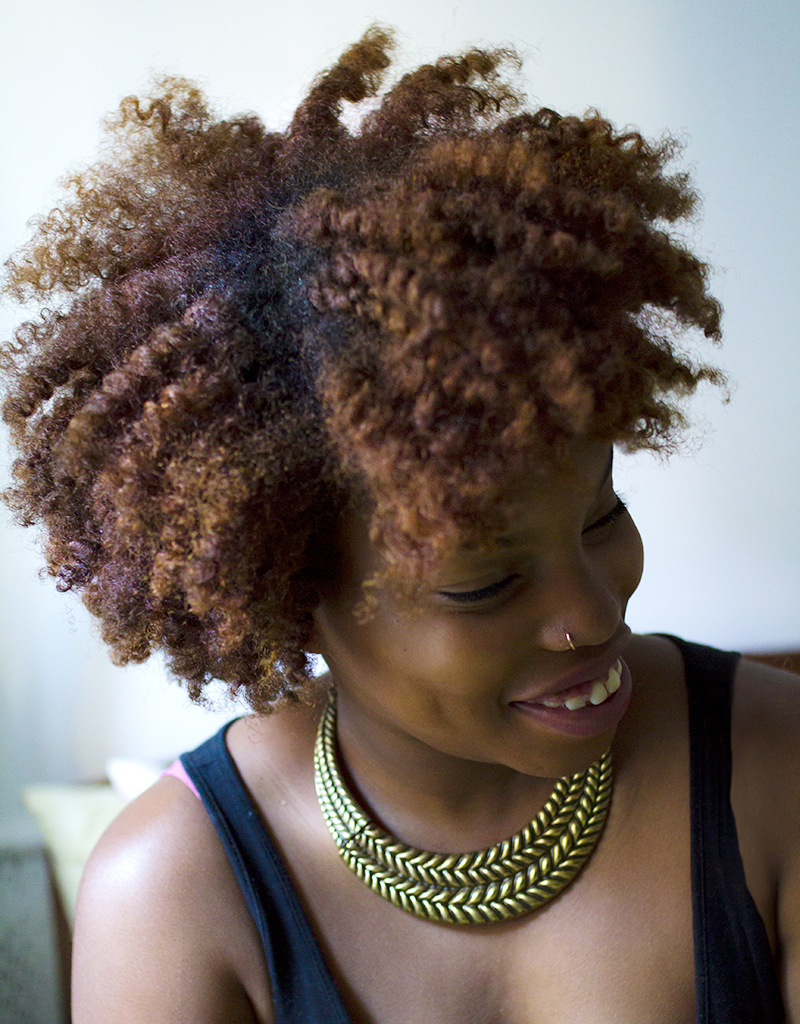
  • Coily hair has tightly coiled, spring-like curls, often with high volume and a tendency toward dryness.

Understanding your hair type helps you choose products and techniques that truly work for your texture.


Hair Porosity: High, Low, or Normal

Your Ultimate Hair Care Routine: How to Get Healthy, Beautiful Hair

Another important factor in your routine is hair porosity, which refers to how well your hair absorbs and retains moisture.

  • High-porosity hair absorbs moisture quickly but loses it just as fast. It often feels dry or frizzy and requires frequent conditioning.
  • Low-porosity hair struggles to absorb moisture due to tightly closed cuticles and may require heat or lightweight products to hydrate effectively.
  • Normal porosity hair falls in between and maintains a healthy balance of moisture absorption and retention.

Knowing your hair porosity allows you to build a more personalized and effective routine.


Your Ultimate Guide to a Winning Hair Care Routine

When it comes to achieving healthy, luscious locks, understanding your hair type and porosity level is essential. With this foundation, you can build a routine tailored to your hair’s specific needs.


Pre-Shampoo Treatments for Healthy Hair

Your Ultimate Hair Care Routine: How to Get Healthy, Beautiful Hair

Before stepping into the shower, consider adding a pre-shampoo treatment to your routine. This step nourishes and protects your hair before cleansing.

Natural oils like coconut oil or argan oil work beautifully. Apply to the lengths and ends, leave on for 15–30 minutes, then shampoo as usual.


Choosing the Right Shampoo and Conditioner

Selecting the right shampoo and conditioner depends on your hair type:

  • Oily hair: Clarifying formulas to remove excess oil
  • Dry or damaged hair: Moisturizing and nourishing formulas
  • Sensitive scalps: Sulfate-free, gentle products

Sulfate-free options are often best for maintaining scalp balance and preventing dryness.


Proper Washing Techniques and Frequency

Wash your hair with lukewarm water, gently massaging shampoo into the scalp. Apply conditioner mainly to the mid-lengths and ends, avoiding the roots to prevent buildup. Pat hair dry with a towel instead of rubbing to reduce breakage.


Nourishing Your Hair for Long-Term Health

Deep Conditioning: Benefits and Best Practices

Your Ultimate Hair Care Routine: How to Get Healthy, Beautiful Hair

Deep conditioning restores moisture, repairs damage, and improves manageability. Look for ingredients like keratin, shea butter, or argan oil.

For enhanced results, apply gentle heat using a warm towel or cap to help the conditioner penetrate deeply.


The Importance of Regular Hair Masks

Your Ultimate Hair Care Routine: How to Get Healthy, Beautiful Hair

Hair masks act as intensive treatments that strengthen hair, prevent breakage, and restore shine. Use them weekly or as needed based on your hair’s condition.


Styling and Protecting Your Hair

Tips for Heat Styling Without Damage

Your Ultimate Hair Care Routine: How to Get Healthy, Beautiful Hair
  • Always use a heat protectant
  • Lower the temperature on tools
  • Limit heat styling frequency

Protective Styles for Healthy Hair Growth

Your Ultimate Hair Care Routine: How to Get Healthy, Beautiful Hair

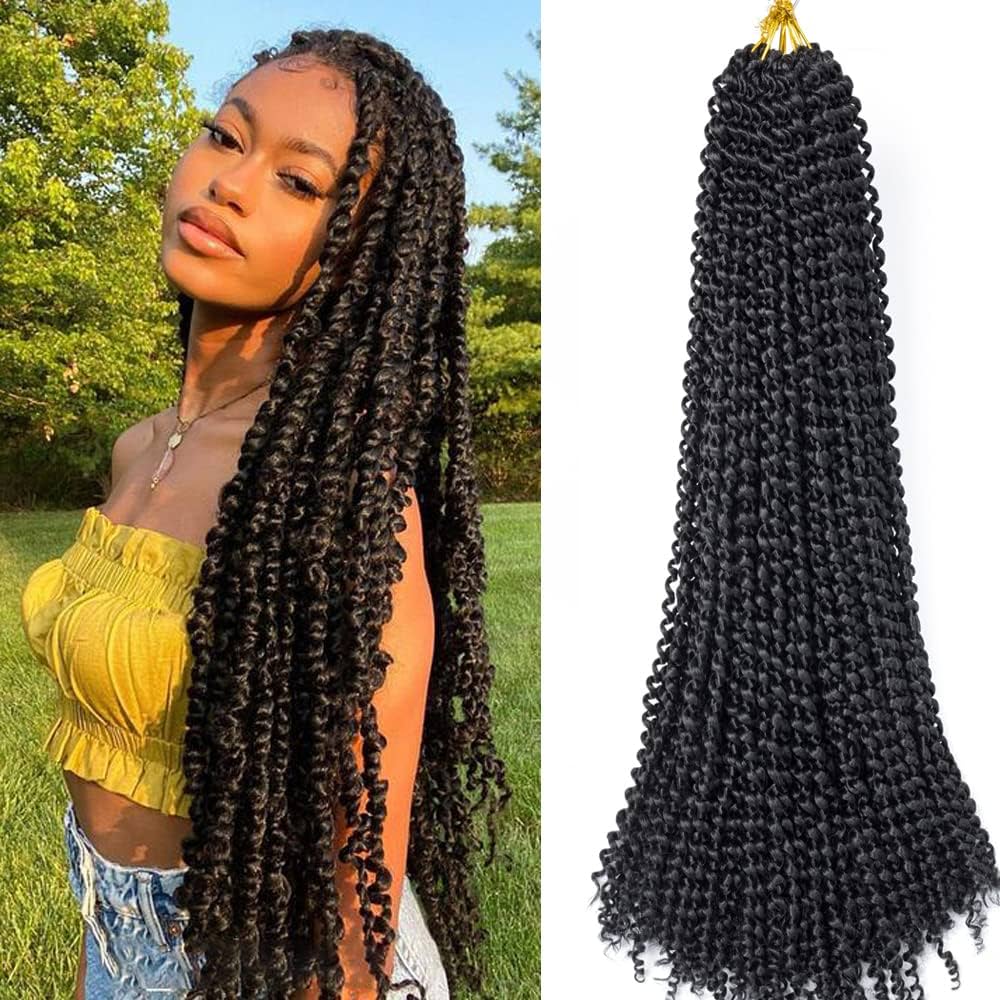
Protective styles such as braids, loose buns, wigs, and extensions help reduce daily manipulation and protect hair ends.


Maintaining a Healthy Scalp

Common Scalp Issues and Remedies

Your Ultimate Hair Care Routine: How to Get Healthy, Beautiful Hair

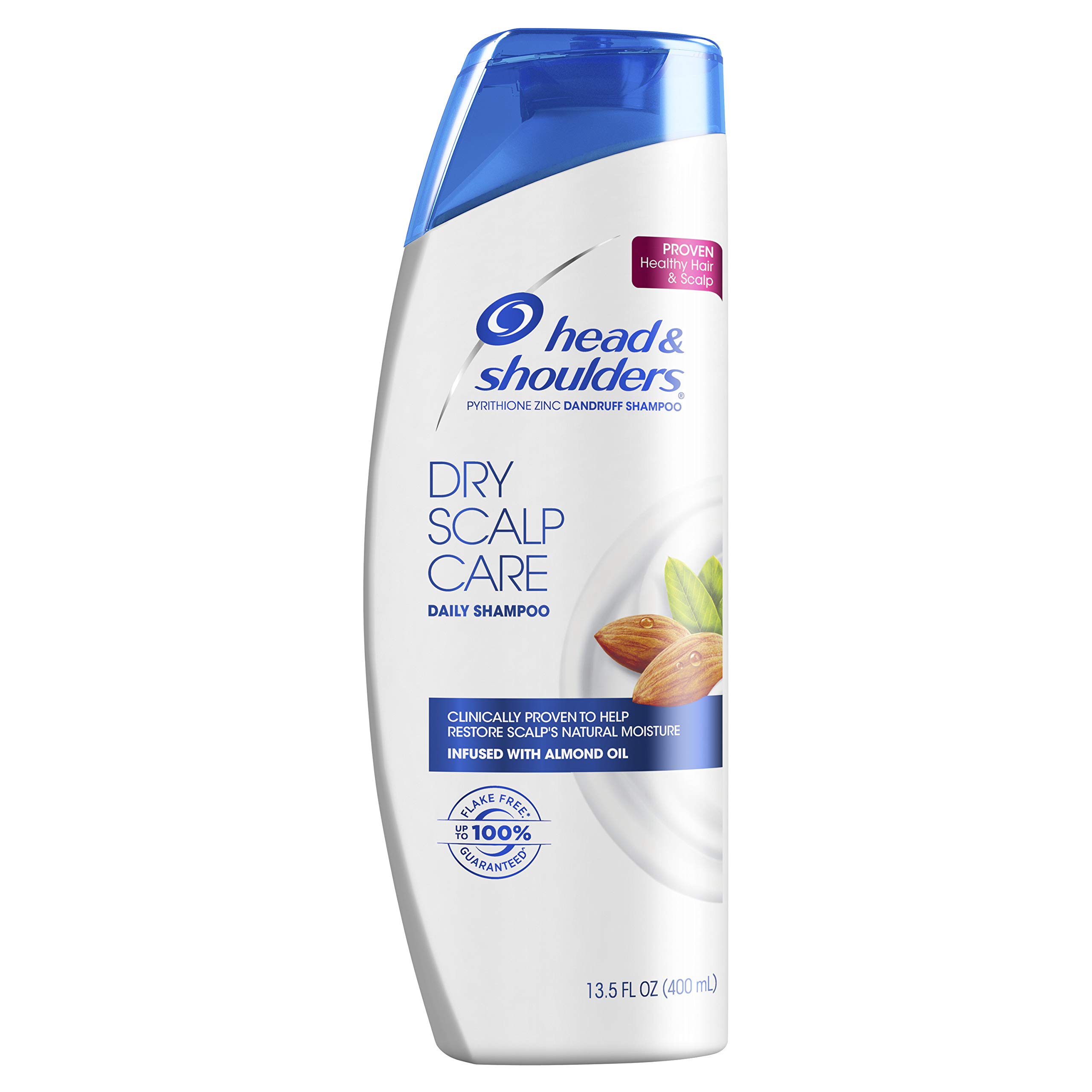
Common scalp issues include dandruff, dryness, oiliness, and itchiness. Use targeted shampoos, moisturizing oils, or soothing treatments like aloe vera to address concerns.


The Benefits of Scalp Massages

Your Ultimate Hair Care Routine: How to Get Healthy, Beautiful Hair

Scalp massages improve circulation, nourish follicles, and promote hair growth. They also help relieve stress and distribute natural oils evenly.


Healthy Habits for Beautiful Hair

Diet and Hydration for Hair Growth

Your Ultimate Hair Care Routine: How to Get Healthy, Beautiful Hair

A balanced diet rich in vitamins A, C, E, biotin, protein, and omega-3s supports hair growth. Staying hydrated keeps the scalp healthy and prevents dryness.


Avoiding Harsh Chemicals and Tools

Choose gentle, sulfate-free products and limit the use of heat tools. Embrace natural textures and heat-free styling whenever possible.


Troubleshooting Common Hair Problems

Dealing With Frizz and Flyaways

Your Ultimate Hair Care Routine: How to Get Healthy, Beautiful Hair

Hydrating products, microfiber towels, wide-tooth combs, and ceramic tools help control frizz and flyaways.


Solutions for Dry and Damaged Hair

Your Ultimate Hair Care Routine: How to Get Healthy, Beautiful Hair

Deep conditioning, reduced washing frequency, lukewarm water, and leave-in treatments restore moisture and strength.


Best Practices for Hair Maintenance

How Often Should You Wash Your Hair?

Most hair types benefit from washing every 2–3 days, but oily hair may need more frequent washing, while dry hair can go longer between washes.


Trimming Split Ends While Maintaining Length

Regular trims every 8–12 weeks prevent split ends from traveling up the hair shaft and help maintain length.


Conclusion: Creating a Personalized Hair Care Routine

Every head of hair is unique. Creating a personalized routine based on your hair type, porosity, and lifestyle is key to long-term results.

Consistency, patience, and gentle care will help you achieve the healthy, beautiful hair you’ve always wanted.

Achieving long, healthy hair is a dream for many of us. However, with so many haircare products and treatments available, it can be difficult to know where to start. Luckily, the brand Grow Gorgeous has curated a line of products specifically designed to promote hair growth and maintain overall hair health.

In this post, we’ll explore the routine secrets for faster hair growth and share some of the best tips for achieving that luscious, voluminous mane you’ve always wanted.


Understanding Hair Growth and Factors That Affect It

Understanding the Hair Growth Cycle

https://post.healthline.com/wp-content/uploads/2020/09/599660-What-Are-the-Four-Stages-of-Hair-Growth_-1296x927-Body.png?utm_source=chatgpt.com
https://i0.wp.com/post.healthline.com/wp-content/uploads/2020/09/599660-What-Are-the-Four-Stages-of-Hair-Growth_-1296x927-Body.png?h=1946&w=1155&utm_source=chatgpt.com
https://images.squarespace-cdn.com/content/v1/60b6a8d269fbd678d013c785/09b5e903-7ac0-40a5-b07e-5d13a73fc4f1/Hair%2BFollicle%2BDiagram%2BLabeled.jpg?utm_source=chatgpt.com

To achieve longer and healthier hair, it is essential to understand the hair growth cycle. The cycle consists of three phases: anagen (active growth), catagen (transitional), and telogen (resting).

The anagen phase is when hair actively grows; the catagen phase signals a transition where hair follicles shrink; and the telogen phase is the resting phase where hair falls out before a new cycle begins.


Common Factors That Affect Hair Growth

Several factors can impact hair growth, and understanding them can help you nurture your hair effectively:

  1. Diet and Nutrition: A balanced diet consisting of essential vitamins and nutrients is crucial for healthy hair growth. Foods rich in omega-3 fatty acids, protein, vitamins A, C, and E, iron, and biotin are particularly beneficial.
  2. Stress and Lifestyle: High-stress levels can contribute to hair loss and slow down hair growth. Adopting stress management techniques, exercising regularly, and getting enough sleep can help promote healthy hair growth.
  3. Environmental Factors: Exposure to harsh environmental elements such as sunlight, pollution, and excessive heat styling can damage hair and slow down growth. Protecting your hair from these factors through proper care, wearing protective styles, and using heat protectants can help maintain healthy hair growth.
  4. Hormonal Changes: Hormonal imbalances, such as those experienced during pregnancy or menopause, can affect hair growth. Consulting with a healthcare professional and finding ways to balance hormones can help alleviate hair growth issues.
  5. Genetics: Your genetic makeup plays a role in determining your hair growth rate and pattern. While you cannot change your genes, you can still promote healthy hair growth by following a good hair care routine.

Understanding the factors that affect hair growth puts you in a better position to nurture and care for your hair effectively. By adopting a healthy diet, managing stress, protecting your hair from the environment, addressing hormonal imbalances, and embracing your genetic makeup, you can ensure that your hair grows longer and healthier.


Grow Gorgeous Hair: Routine Secrets for Faster Growth

https://gisou.com/cdn/shop/articles/Hair_Care_Routine_Steps_for_Healthy_Hair.jpg?v=1652295778&utm_source=chatgpt.com
https://images.squarespace-cdn.com/content/v1/5f2864b6ee63644ee0b157d3/1730132846923-DFE5RXPHBAPHRJ1VIFDB/how%2Bto%2Bdo%2Bscalp%2Bmassage.jpg?utm_source=chatgpt.com
https://static.showit.co/800/cm5ryfQLCiuC4aq0Vna4mw/shared/collective_headshots_2022_00245.jpg?utm_source=chatgpt.com

Ensuring optimal hair growth requires a holistic approach that focuses on nourishing your scalp. By adopting the right hair care routine and incorporating scalp-focused techniques, you can boost the growth and health of your hair.

Here, we will discuss the importance of choosing the right shampoo and conditioner and the benefits of scalp massages and stimulating hair follicles.


Choosing the Right Shampoo and Conditioner

Selecting the right shampoo and conditioner is crucial for promoting hair growth. Look for products that are free from harsh chemicals and sulfates, as these can strip your scalp of its natural oils and hinder hair growth.

Instead, opt for products that contain nourishing ingredients such as biotin, keratin, and vitamins. These ingredients can help strengthen your hair and improve scalp health, creating an optimal environment for hair growth.


Scalp Massages and Stimulating Hair Follicles

https://cdn.shopify.com/s/files/1/0717/7869/7519/files/person-enjoying-scalp-massage-spa_480x480.jpg?v=1725532142&utm_source=chatgpt.com
https://aventusclinic.com/wp-content/uploads/2024/10/Hair-Loss-Derma-Roller.webp?utm_source=chatgpt.com
https://m.media-amazon.com/images/I/81OOfcmnvYL._AC_UF350%2C350_QL80_.jpg?utm_source=chatgpt.com

Scalp massages are a simple yet effective way to stimulate hair follicles and promote blood circulation in the scalp. Gently massage your scalp using your fingertips in circular motions for a few minutes each day.

You can also use essential oils such as rosemary or peppermint oil during the massage, as these can further enhance blood circulation and promote hair growth.

In addition to scalp massages, consider incorporating techniques such as derma rolling and acupressure to stimulate hair follicles.


Essential Nutrients for Healthy Hair Growth

https://hips.hearstapps.com/hmg-prod/images/white-bean-cannellini-salad-vegan-salad-diet-menu-royalty-free-image-1571691378.jpg?crop=0.668xw%3A1.00xh%3B0.328xw%2C0.00255xh&utm_source=chatgpt.com
https://www.ashpveda.com/cdn/shop/articles/Biotin-Rich_Foods_for_Hair_Growth.jpg?v=1749203619&width=1100&utm_source=chatgpt.com
https://www.cottercrunch.com/wp-content/uploads/2022/01/omega-rich-foods.jpg.jpg?utm_source=chatgpt.com

Ensuring optimal hair growth requires more than just a proper hair care routine. It also involves providing your body with the necessary nutrients to support healthy hair growth.

Vitamins and Minerals for Hair Health

A variety of vitamins and minerals play a crucial role in maintaining the health of your hair, including biotin, vitamin E, vitamin C, iron, and zinc.


Importance of a Balanced Diet for Hair Growth

Incorporate leafy greens, fatty fish, nuts and seeds, lean proteins, and fruits to support stronger, healthier hair from within.


Incorporating Hair Growth Treatments into Your Routine

https://www.health.com/thmb/3HG4x6lmUOCfZnzxjiK5oL_sgiE%3D/1500x0/filters%3Ano_upscale%28%29%3Amax_bytes%28150000%29%3Astrip_icc%28%29/hlt-kerastase-serum-extentioniste-scalp-and-hair-serum-apply-updated-tout-d168079e278b413fb696cb62c67253b9.jpg?utm_source=chatgpt.com
https://m.media-amazon.com/images/I/71FfOvGXTYL._AC_UF1000%2C1000_QL80_.jpg?utm_source=chatgpt.com
https://www.particleformen.com/wp-content/uploads/2022/04/Hair-Vitamin-Gummies-Website-Product-Photos-V4-800x1200-1.jpg?utm_source=chatgpt.com

Ensuring optimal hair growth goes beyond just a proper hair care routine. Using hair growth serums, oils, and supplements can support faster and healthier hair growth when used consistently.


Practices and Habits to Promote Faster Hair Growth

https://hips.hearstapps.com/hmg-prod/images/gh-best-heat-protectants-66ba5fcd9f00d.png?crop=0.6666666666666666xw%3A1xh%3Bcenter%2Ctop&resize=1200%3A%2A&utm_source=chatgpt.com
https://i.ytimg.com/vi/pOCjhv3CFJE/maxresdefault.jpg?utm_source=chatgpt.com
https://cdn.shopify.com/s/files/1/0807/7897/files/3._Protective_Styles-02_480x480.jpg?v=1715169108&utm_source=chatgpt.com

Avoid excessive heat and overstyling, and protect your hair from environmental damage such as sun exposure, pollution, chlorine, and saltwater.


Styling Tips for the Appearance of Longer Hair

https://media.glamourmagazine.co.uk/photos/67ed2f11a9ad5f2e2207b1b0/1%3A1/pass/LAYERED%2520HAIRCUT%2520020425%2520MAIN.jpg?utm_source=chatgpt.com
https://hairstyles.thehairstyler.com/hairstyle_views/front_view_images/13940/original/Kerry-Washington-bob-haircut.jpg?utm_source=chatgpt.com
https://www.byrdie.com/thmb/8X3T7Flmek7iMQxwbkQEKwUmnT8%3D/1500x0/filters%3Ano_upscale%28%29%3Amax_bytes%28150000%29%3Astrip_icc%28%29/PonytailLead2-ddb2071ffc5a4cb88ba3671bdd8fabf9.png?utm_source=chatgpt.com

4

Choosing the right haircut and styling technique can instantly create the illusion of longer, fuller hair.


Essential Haircare Rituals for Faster Growth

https://ceremonia.com/cdn/shop/articles/MYCERLF62A8681-1616694530449_0aa2af28-d2fc-4186-acdc-5a456c9256d1.jpg?v=1759938196&utm_source=chatgpt.com
https://i.ytimg.com/vi/pOCjhv3CFJE/hq720.jpg?rs=AOn4CLD7iQAZwst9zURGDQeeazbC76DNKw&sqp=-oaymwEhCK4FEIIDSFryq4qpAxMIARUAAAAAGAElAADIQj0AgKJD&utm_source=chatgpt.com
https://media.allure.com/photos/670fd73e45ebc4435491e27a/2%3A3/w_1332%2Ch_1998%2Cc_limit/Best%20Sulfate-Free%20Shampoo%20102024%20Lede.jpg?utm_source=chatgpt.com

Proper washing, gentle drying, reduced washing frequency, and avoiding harsh chemicals all contribute to healthier, stronger hair growth over time.


Building a Personalized Hair Growth Routine

https://cdn.create.vista.com/downloads/81ba5ecc-4623-461e-a3d5-207e9a58afc5_1024.jpeg?utm_source=chatgpt.com
https://authenticallydel.com/wp-content/uploads/2023/01/self-care-shower-checklist-488x1024.jpg?utm_source=chatgpt.com
https://i.pinimg.com/736x/d5/cb/9f/d5cb9f6b58bda538b31394383f37782f.jpg?utm_source=chatgpt.com

Building a personalized routine based on consistency, scalp health, and gentle care is key to achieving long-term hair growth results.


Frequently Asked Questions About Hair Growth and Maintenance

How long does it take for hair to grow?
Hair growth varies, but on average hair grows about half an inch per month. Consistent care and a healthy lifestyle can support better growth.

Can trimming hair help it grow faster?
Trimming doesn’t directly increase growth, but it prevents split ends and breakage, helping you retain length.

Are there any specific diets or supplements for hair growth?
A balanced diet rich in vitamins, protein, and minerals supports healthy hair. Supplements like biotin and collagen may help, but consult a healthcare professional first.

Can stress affect hair growth?
Yes. Chronic stress can disrupt the hair growth cycle, leading to increased shedding or slower growth. Stress management, exercise, and self-care can help.


Final Thoughts

There you have it; the secrets to faster hair growth are in your hands. We hope you enjoyed reading about our hair care routine and found these tips useful. Don’t forget to share your experience with us and subscribe to our newsletter for more beauty and haircare inspiration.

Twist hairstyles remain one of the most sought-after protective style categories in 2025. They combine aesthetic versatility, cultural heritage, and practical hair care. As noted by hairstyling guides:

Twists are a classic and versatile hairstyle that can be styled to suit any occasion or personality.
Whether you’re seeking texture, volume, or low-manipulation styling, twists deliver.


Understanding the Types of Twist Hairstyles

Below is a breakdown of the major twist styles — so you know what each is, who it’s best for, and how to maintain it.

1. Two-Strand Twists

Also known as the foundational twist. Two sections of hair are twisted around each other. Byrdie+1

https://abeautifulmess.com/wp-content/uploads/typekit/.a/6a00d8358081ff69e201b8d095e5be970c-800wi
https://abeautifulmess.com/wp-content/uploads/2014/11/two-strand-twist.jpeg
https://www.byrdie.com/thmb/8t-gzUDMx4wp9yja3U64oVocznc%3D/1500x0/filters%3Ano_upscale%28%29%3Amax_bytes%28150000%29%3Astrip_icc%28%29/all-about-twists-or-two-strand-twists-hairstyles-400274-2812-b214dd960c1e41aa9671fd5d5a0a62b0.jpg

Best for: Natural hair textures 3-4A. Low cost, quick install.
Maintenance Tip: Keep ends sealed, sleep on satin, refresh every 1–2 weeks.

2. Senegalese Twists (Rope Twists)

Sleek, smooth rope-like twists often made with extensions.

https://www.byrdie.com/thmb/yCrX-ppEsprphr-f9ql7x5Uopoo%3D/1500x0/filters%3Ano_upscale%28%29%3Amax_bytes%28150000%29%3Astrip_icc%28%29/69267274_1326241437540353_7954131379642804083_n-b75e084b95d14903bcedcb8cd0c7dbd9.jpg
https://i.pinimg.com/736x/25/9e/23/259e230fb447acff7f89ade43f817578.jpg

Best for: Longer wear, those seeking an elegant finish.
Maintenance Tip: Use a lightweight oil on the scalp and avoid heavy buildup.

3. Marley Twists

Textured, rope-looking twists created using Marley hair for fullness.

https://www.byrdie.com/thmb/BDx-1tBvz6wW-NehT--Z0xVWpms%3D/1500x0/filters%3Ano_upscale%28%29%3Amax_bytes%28150000%29%3Astrip_icc%28%29/250157940_998307517686232_3521795930968704232_n-41bb4bc3c98941d6a22e78abbed6c434.jpg
https://www.byrdie.com/thmb/Bf5U0rsu-77t8x9ieJHNEllIuBY%3D/1500x0/filters%3Ano_upscale%28%29%3Amax_bytes%28150000%29%3Astrip_icc%28%29/182718376_148131123938013_6632203771529322624_n-86d2e45a02c242baa840fde5de26d0b3.jpg
https://i.pinimg.com/736x/0c/3c/c1/0c3cc15406fa2c906e0d9ccd57486ede.jpg

Best for: Medium-to-coarse textures wanting instant volume and length.
Maintenance Tip: Because of texture, may require more upkeep to avoid frizz.

4. Mini Twists

Tiny two-strand twists, usually on natural hair without extensions.

https://i.ytimg.com/vi/09khPjoFZN8/maxresdefault.jpg
https://media.allure.com/photos/642af5d3272fe21bb56aecde/master/w_1600%2Cc_limit/minitwistbun.jpg
https://media.allure.com/photos/67ace3fef6be75fd1450aae5/master/w_1600%2Cc_limit/mini%2520twist%2520bun.jpeg

Best for: Natural hair, short length, and maximum styling versatility.
Maintenance Tip: Small size means longer install time, but also longer wear time (2-6 weeks).

5. Flat Twists

Twists done close to the scalp, similar to cornrows, creating a sculpted base.

https://i.ytimg.com/vi/S0r8HOmGk6M/maxresdefault.jpg
https://www.perfectlocks.com/cdn/shop/articles/flat-twist.jpg?v=1703130105
https://i.ytimg.com/vi/0FCradmswK8/maxresdefault.jpg

Best for: Sleek, close-to-scalp styles, up-dos, protective base for wigs.
Maintenance Tip: Use a good edge control and satin bonnet to maintain smooth finish.

6. Passion Twists & Jumbo Twists

Other variations: looser curls in twists (passion) or much thicker volume (jumbo).

https://i2.wp.com/www.hadviser.com/wp-content/uploads/2023/08/21-long-twist-hairstyle-Co21GIpOFqX.jpg?resize=1262%2C1621&ssl=1
https://m.media-amazon.com/images/I/71ufMZOf3ML._AC_UF1000%2C1000_QL80_.jpg
https://i.ytimg.com/vi/Mp_q9hmdgSU/maxresdefault.jpg

Best for: Bold looks, long wear (6+ weeks), statement styling.
Maintenance Tip: Ensure weight is balanced on roots to avoid tension.


How to Choose the Right Twist Style for You

  • Hair texture & length: Fine/short hair → mini or two-strand. Medium/coarse → Marley or passion.
  • Maintenance level: Do you want quick install (two-strand) or longer wear (Senegalese)?
  • Lifestyle: Travel? Go for styles with low-maintenance upkeep.
  • Heat/time availability: Mini twists or jumbo twists take more time; two-strand takes less.
  • Styling goals: Volume vs sleek vs parting creativity.

Step-By-Step: General How-To for Twist Hairstyles

  1. Cleanse and Condition: Always begin with clean, moisturized hair.
  2. Section Hair: Choose size of sections to match twist style.
  3. Apply Styling Product: Curl cream, gel or butter to help hold and reduce frizz.
  4. Twist: Depending on style, twist 2 strands, or wrap extensions.
  5. Seal Ends / Style: Use hot water or styling tool for curly ends if desired.
  6. Dry & Set: Air dry or hood dry until fully dry.
  7. Maintain: Cover at night, hydrate scalp, touch-up as needed.

Maintenance & Care Tips

  • Sleep on a satin pillowcase or bonnet to reduce frizz.
  • Moisturize scalp every few days with lightweight oil.
  • Avoid high tension styles at roots to prevent breakage.
  • Refresh edges with gel and satin edge wrap.
  • For extension styles: cleanse scalp every 1–2 weeks using diluted shampoo.

Inspiration Gallery of Twist Styles

https://i.pinimg.com/736x/e0/7a/5a/e07a5a88c2a52acfcefe8af94ed0ed10.jpg
https://www.byrdie.com/thmb/8t-gzUDMx4wp9yja3U64oVocznc%3D/1500x0/filters%3Ano_upscale%28%29%3Amax_bytes%28150000%29%3Astrip_icc%28%29/all-about-twists-or-two-strand-twists-hairstyles-400274-2812-b214dd960c1e41aa9671fd5d5a0a62b0.jpg
https://i.pinimg.com/736x/cf/10/42/cf104252005d39bc87778408f2aa738b.jpg

Why Twist Hairstyles Matter Beyond Styling

Twists are more than just fashion — they represent a heritage of craftsmanship, protective beauty, and cultural identity. According to the Wikipedia article on twisted styles:

“Hairstyle popular with Afro-textured hair… protective styles…”
They provide low-manipulation care, allowing natural hair to grow while still looking polished.

Final Thoughts

Twist hairstyles offer a perfect blend of style, culture, and hair health — making them ideal for 2025 and beyond. Whether you’re choosing a quick two-strand for daily wear, or going bold with jumbo passion twists, you’re investing in your hair’s growth and your personal aesthetic.
Choose the type that fits your lifestyle, protect your style with good maintenance, and enjoy the look of confidence and texture.
#TwistHairstyles2025 #ProtectiveStyles #NaturalHairJourney

Bantu knots have become one of the most searched hair trends of 2025 — and with good reason.
Originating from African heritage and loved for centuries, these sculptural knots are equal parts protective, expressive, and timelessly stylish.

They protect ends from breakage, allow your hair to rest, and create two looks in one: wear the knots for a sleek, elevated style — or unravel them for soft curls known as a Bantu knot-out.

Image
bantu knot hairstyles 2025 protective style inspiration


A Brief History and Cultural Legacy

The Bantu peoples across Southern Africa have worn this hairstyle for generations, symbolising strength, identity, and artistry.
In recent years, Bantu knots have returned to the global stage as a proud expression of culture and self-care.

Respect note: When wearing Bantu knots, always acknowledge their African origins — cultural appreciation is powerful; cultural appropriation is not.

Image
traditional bantu knots hairstyle African roots


Step-by-Step: How to Do Bantu Knots (At Home or Salon)

  1. Cleanse & Condition — Start on clean, detangled, moisturised hair.
  2. Section Hair — Use a rattail comb; small sections create tighter curls, larger ones create volume.
  3. Apply Product — Curl creams or twisting butters provide hold and shine.
  4. Twist & Wrap — Twist hair tightly, then wrap it around itself into a coil. Secure with pins or elastics.
  5. Dry & Set — Air-dry or use a hooded dryer until fully dry.
  6. Optional Knot-Out — Once dry, unravel for soft, defined curls.
  7. Protect at Night — Wrap in a silk or satin scarf to prevent frizz.

Image
how to do bantu knots step by step tutorial


Trending Bantu Knot Hairstyles for 2025

1. Mini Bantu Knots

Small, geometric sections create intricate texture and a futuristic feel.
Ideal for short or medium natural hair.
Image
mini bantu knots short hair 2025 trend


2. Chunky Statement Knots

Bold, large knots make a sculptural impact — perfect for photo-ready moments.
Image
chunky bantu knots hairstyle idea 2025


3. Braided Base or Cornrow Fusion

Pair Bantu knots with feed-in braids or cornrows for added detail and grip.
Image
bantu knots with braids and cornrows protective style


4. Accessorised Knots

Add cuffs, beads, gold wire, or coloured elastics for a personalised finish.
Image
accessorised bantu knots with beads and gold wire


3. Knot-Out Curls

Once unraveled, reveal soft spiral curls with major volume.
Image
bantu knot out curls hairstyle result


Who Can Wear Bantu Knots

Hair TypeStyling Tips
4A–4C Natural HairBest definition; use moisture-rich cream.
3A–3C Curly HairSmaller sections + firm hold gel to keep shape.
Short HairTry mini knots or combine with braids.
Locs & TwistsCreate knots over existing locs for a protective updo.
Relaxed HairUse moderate tension to avoid breakage.

Why Bantu Knots Are Travel-Perfect

  • Low-maintenance: No daily styling required.
  • Two-in-one style: Wear as knots during flights, unravel as curls after arrival.
  • Versatile: Elegant enough for dinners, practical for sightseeing.
  • Protective: Keeps ends sealed against travel dryness.

Image
bantu knots protective travel hairstyle


Maintenance & Care Tips

  • Wrap in silk/scarf at night to avoid frizz.
  • Re-hydrate scalp with light oil every 2–3 days.
  • Use mousse to refresh if knots loosen.
  • Avoid over-twisting; keep tension gentle on edges.
  • After knot-out, apply a few drops of oil for definition.

Inspiration Gallery

Image
Image
Image

bantu knot hairstyle inspiration gallery women 2025


Final Thoughts

Bantu knots aren’t a passing trend — they’re a timeless celebration of natural texture, heritage, and self-expression.
In 2025, the look evolves with creative parting, accessories, and dual styling options, but its roots remain proudly African.

So whether you’re protecting your curls, experimenting with fashion, or travelling light, Bantu knots give you style, strength, and story — all in one twist.

Protect it. Own it. Style it.
#BantuKnots2025 #NaturalHair #ProtectiveStyle #SheTravelsChic

Short nails are more than a beauty convenience — they’re a style statement. Editors and nail artists agree that for fall 2025, short nails are the perfect canvas for sophisticated color shifts, textured finishes, and even subtle nail art. At the same time, they’re practical for everyday life, travel, and busy schedules.

This post will cover:

  • The best short nail shapes + lengths for October 2025
  • Top color trends for short nails this fall
  • Nail design ideas tailored for short nails
  • How to keep short nails strong & travel-ready
  • A full gallery of short nail inspiration images

1. Best Short Nail Shapes & Lengths

When you’re working with shorter nails, shape and finish matter more than length. Nail artists highlight:

  • Soft square: clean, modern, perfect for short length.
  • Squoval (square-oval hybrid): shows more surface but keeps it practical.
  • Natural edge: minimal free-edge gives a crisp, elegant look.

Travel-Chic Tip

For travel, choose a length that doesn’t interfere with daily tasks (boarding passes, cameras, bags). Short nails with uniform shape will photograph better and hold up longer on the go.


2. Top Fall 2025 Colors & Finishes for Short Nails

TrendDescriptionWhy it works on short nails
Chestnut-Brown & EspressoRich earthy browns are dominating 2025 fall nails. The darker shade defines the nail edge and gives polish more impact on a short length.
Dirty Plum & Deep NavyUnexpected alternatives to black, yet still moody. These deeper tones offer sophistication and elongate the nail visually.
Mixed Metals & Chrome AccentsMetallic finishes, mixed textured tips, and minimal art on short lengths. Adds dimension without needing length — perfect for short nail canvases.
Sheer Neutrals & Milky FinishesSoft, minimalist and travel-friendly finishes.Simple and elegant—less prone to chipping, ideal for busy schedules.

3. 10 Short Nail Design Ideas for October 2025

Here are ten strong short-nail design ideas you can pitch to your readers. Each fits October’s mood and is especially suited for shorter nails.

1. “Brown Cat-Eye”

https://m.media-amazon.com/images/I/71q6jZOLJlL._UF1000%2C1000_QL80_.jpg
https://m.media-amazon.com/images/I/71CFIJpIVOL._AC_UF1000%2C1000_QL80_.jpg
https://greenweddingshoes.com/wp-content/uploads/2025/02/trendy-chocolate-cat-eye-manicure-thumb.jpg

An elegant chocolate-brown base with subtle magnet-effect “cat eye” shimmer. Suitable for short nails because the reflective detail adds length visually.

2. Mixed Metal Tips

https://www.byrdie.com/thmb/xH4AkQ2fGSlib1D9JJmJaFznP5g%3D/1500x0/filters%3Ano_upscale%28%29%3Amax_bytes%28150000%29%3Astrip_icc%28%29/Metals13-dd941e679e974080838087d7641c6d47.jpg
https://www.byrdie.com/thmb/Xc-igwZrXBk8St9R2KsH59SyQj0%3D/1500x0/filters%3Ano_upscale%28%29%3Amax_bytes%28150000%29%3Astrip_icc%28%29/Metals21-cd8cbd72a9754446bd2af73e06f215c4.jpeg
https://www.instyle.com/thmb/7BPRdHfY_ocI8wwdw1btrv9Z4ts%3D/1500x0/filters%3Ano_upscale%28%29%3Amax_bytes%28150000%29%3Astrip_icc%28%29/539402248_18328442437225499_8975399517997925958_n-47709fc973f24a3ebde3ec0146810de3.jpeg

Short square nails in a muted base colour, topped with fine gold or silver lines at the tip. Trendy and low-maintenance.

3. Tortoiseshell Accents

https://thepinkissue.com/wp-content/uploads/2025/08/Short-tortoise-shell-manicure.jpg.webp
https://i.pinimg.com/736x/57/30/fb/5730fbf266b4c0e98052963e26c753e0.jpg
https://i.pinimg.com/736x/c2/82/d2/c282d21d8f4ea6217d0acf4b88dc9f5e.jpg

Classic tortoiseshell pattern on one or two nails, others in a solid neutral. Perfect for fall and works especially well on shorter lengths.

4. Deep Navy Squoval

https://us.manucurist.com/cdn/shop/products/Navy-Blue_claire_lifestyle_1800x1800_d1a16537-65cd-472c-bf30-f0396a168c1e.jpg?v=1701189928&width=1500
https://m.media-amazon.com/images/I/71UbzcTfdcL._AC_UF1000%2C1000_QL80_.jpg
https://www.stoleninspiration.com/wp-content/uploads/2025/04/Classic-Nail-Blue-Short-Nails-Blue-Nails.jpg

A rich navy shade adds polish and depth without needing long nails. Pair with gold jewellery for extra finish.

5. Sheer Milky Neutral

https://i0.wp.com/greenweddingshoes.com/wp-content/uploads/2024/03/simple-short-milky-nails-with-nude-polish.jpg?fit=1024%2C9999
https://i0.wp.com/greenweddingshoes.com/wp-content/uploads/2024/03/simple-short-milky-nails-with-nude-polish-color.jpg?fit=1024%2C9999
https://www.byrdie.com/thmb/8fYefZ3MAJh-Zn-j7taNIaeffWI%3D/1500x0/filters%3Ano_upscale%28%29%3Amax_bytes%28150000%29%3Astrip_icc%28%29/Snapinst.app_249426167_605400313992353_1509317143482156658_n_1080-90e82e7c53474b36a2ed94a6fc353151.jpg

Minimalist and elegant—great for readers who want low-key yet refined nails. Excellent for travel or professional settings.

6. Pop of Ruby Red

https://www.glamnetic.com/cdn/shop/articles/BestFallBurgundyNailsin2025_Blog.webp?v=1756126161&width=2048
https://lh7-rt.googleusercontent.com/docsz/AD_4nXeEGbwY3xzp1ursMOEJgUlMnFv-882pB1DLL8gDeK6dxjlj26VRUMD8L_p8HifUcwOLoXAwMOwNAAcYk9BXvtyav-y679n6_UhNJMb3RGDBCDK5ikvO3RN7VAFCjghgc1TUc668Ng?key=doCx2WR_7f_yD8NyHUsuCK20
https://m.media-amazon.com/images/I/81kBNr1DfQL._AC_UF1000%2C1000_QL80_.jpg

Classic red but tailored for short nails. Choose a wearable red (not neon) and keep the shape neat for maximum sophistication.

7. Half-Moon Metallic

https://www.instyle.com/thmb/cWYlrXYscFJ8RTFpu9Z9a7Qw8lg%3D/1500x0/filters%3Ano_upscale%28%29%3Amax_bytes%28150000%29%3Astrip_icc%28%29/Screenshot2025-07-31at5.25.59PM-37ad398eda04414dac19af064a552068.png
https://i.pinimg.com/736x/b5/cf/ce/b5cfce2cf7be92189dbd7d653101be47.jpg

Create a half-moon shape at the base or tip using chrome or rose gold—gives interest without length.

8. Autumn Gradient (ombre)

https://i.pinimg.com/564x/dc/94/7a/dc947a663961d4c6f69d1e715d95c476.jpg
https://www.instyle.com/thmb/NlIk2OvT1HqFTnj_F0tbIhxr-vQ%3D/1500x0/filters%3Ano_upscale%28%29%3Amax_bytes%28150000%29%3Astrip_icc%28%29/instyle_ombrenailsmain-f774a7618eba4c728b01072ef5c0f924.jpeg

A caramel-to-brown gradient or subtle fade across the nail surface draws the eye and adds dimension.

9. Minimal Dot/Line Art

https://i.pinimg.com/474x/d2/d6/28/d2d6285a98044f0e2744ab9843fa314a.jpg
https://www.byrdie.com/thmb/de4KVIEy4W5RLnsNj80BM8swKF0%3D/1500x0/filters%3Ano_upscale%28%29%3Amax_bytes%28150000%29%3Astrip_icc%28%29/152302352_798723590715391_3384040870404736487_n-e4c347d0d146469faea64c09d0d2df8f.jpg
https://www.byrdie.com/thmb/-WE9Ao0Uwooyd7AdremgWTn5sJI%3D/1500x0/filters%3Ano_upscale%28%29%3Amax_bytes%28150000%29%3Astrip_icc%28%29/1-nails-9bf897281b1540a29caf0f6a4bad4466.jpg

Tiny dots, thin lines or micro-graphic art keep it chic but interesting. Short nails make the minimal art stand out.

10. Olive & Espresso Combo

https://styleyouroccasion.com/wp-content/uploads/2025/06/olive-green-nails-basecoatstories.jpg
https://hips.hearstapps.com/hmg-prod/images/olive-autumn-nails-68b6a5e04b36c.jpg?resize=980%3A%2A
https://www.byrdie.com/thmb/HG37Vi0cNa7PbdfTP3oKCxO6ojE%3D/1500x0/filters%3Ano_upscale%28%29%3Amax_bytes%28150000%29%3Astrip_icc%28%29/lolo.nailedit-cb053f517edd4be68ab26054d44bb86d.jpg

Combining earthy olive and deep espresso brown offers a sophisticated fall palette—especially for shorter nails where strong solid colours work best.


4. Nail Care Tips for Short Nails

  • Prep properly: Push back cuticles softly and keep free-edge minimal for neat finish.
  • Keep the surface smooth: Use thin coats of polish, buff lightly.
  • Use a high-gloss top coat: Short nails benefit from shine to look longer.
  • Strengthening base coat: Choose one with proteins if your nails are prone to breakage.
  • Travel-friendly maintenance: Pack a neutral polish and top coat for touch-ups on the go.

Final Thoughts

Short nails don’t mean less-style; they mean smart style. This October, choose designs that work for your lifestyle, that travel well, and that reflect the rich tones of fall 2025. From chestnut brown to mixed-metal accents, from minimalist milky abstracts to classic red, there’s a look here for every mood.

Go ahead — book your mani, pick your shape, and let your short nails steal the spotlight.
#ShortNailsOctober #FallNailTrends2025 #SheTravelsChic

A capsule wardrobe is a carefully curated selection of clothing that mixes and matches seamlessly to create dozens of outfits from a limited number of pieces.

In 2025, this concept is evolving beyond minimalism — it’s about intentional, travel-friendly fashion: investing in quality, versatility, and sustainability while still embracing trends like quiet luxury and the pop of red.

This post goes beyond just a 15-item list. You’ll find:

  • 25 capsule essentials instead of 15 (so you can adapt for work, travel, and lifestyle)
  • Outfit formulas for everyday & travel
  • Color palette + packing strategy for real-life application
  • Image inspiration

How to Build the Perfect Fall Capsule Wardrobe

Before buying, clarify three key points:

1. Your Color Story

Build around 1–2 base neutrals + 1 accent color.

  • Base neutrals: Camel • Cream • Black • Gray
  • Accent shades: Olive • Burgundy • Pop of Red

2. Your Lifestyle

Ask: Do I commute, travel, or work hybrid?
Your capsule should fit your reality — not Pinterest perfection.

3. Your Climate

If you’re in a colder region (like Scandinavia or Northern US), layer heavier knits and long coats.
If temperate (like California, Southern Europe), use lighter fabrics and removable layers.


Outerwear: 4 Core Jackets & Coats

Invest in outerwear that elevates even the simplest base.

1. Camel Wrap Coat ($480)
Your capsule’s hero. Elegant, structured, timeless.
ravel Tip: Works with every color palette and photographs beautifully.
Image

2. Funnel-Neck Wool Coat ($450)
Minimalist and modern — embodies the “From the Neck Up” trend.

3. Lightweight Trench in Taupe ($350)
Perfect transitional layer for unpredictable weather.
Image

4. Quilted Short Jacket ($230)
Cozy, chic, and functional for off-duty or travel days.
Image


👚 Tops & Layers: 6 High-Quality Basics

The key to a successful capsule wardrobe is layering power.

5. Cashmere Crewneck Sweater ($490) — Classic and travel-proof.
6. Ribbed Mock-Neck Knit ($140) — For sleek layering under coats.
7. Chunky Cropped Sweater ($220) — Perfect for pairing with skirts or dresses.
8. Crisp White Shirt ($150) — A non-negotiable staple.
9. Silk-Blend Blouse ($250) — Polished enough for dinner or meetings.
10. Leather Moto Jacket ($380) — Adds structure and edge.

Image

Bottoms: 5 Mix-and-Match Essentials

Your bottoms determine your silhouette. Stick to tailored, versatile cuts.

11. Wide-Leg Wool Pants ($250) — Elegant yet practical.
12. Pleated Midi Skirt ($220) — Feminine movement meets polish.
13. Barrel-Leg Jeans ($180) — The denim shape dominating 2025.
14. Faux-Leather Pants ($270) — Adds texture and depth.
15. Tailored Shorts ($190) — For early fall or travel days.

Image

Dresses: 4 Multi-Season Staples

Dresses bring versatility to your capsule — they can be styled solo or layered.

16. Knit Midi Dress ($310) — Travel-friendly, timeless.
17. Belted Shirt Dress ($250) — Flattering and packable.
18. Red Wrap Dress ($280) — Adds color and romance to your wardrobe.
19. Ribbed Long-Sleeve Dress ($190) — For work-to-dinner transitions.

Image

Shoes & Bags: 4 Core Investments

20. Brown Knee-High Boots ($480) — Polished, versatile, durable.
21. Suede Loafers ($220) — Ideal for city travel.
22. Structured Tote Bag ($250) — Fits laptops + airport chic.
23. Convertible Crossbody ($270) — The day-to-night essential.

Image

Accessories: 2 Understated Details That Finish the Look

24. Wool Wrap Scarf ($160) — Cozy and elegant; choose olive or cream.
25. Gold Hoop Earrings ($75) — Minimalist polish that completes any outfit.

Image

How to Create 100+ Outfits from 25 Pieces

SettingOutfit FormulaStyle Tip
Airport LookWide-leg pants + mock-neck knit + trenchAdd loafers & scarf for polish
Work DayPleated skirt + silk blouse + camel coatRed lip for power minimalism
Weekend BrunchBarrel jeans + cropped sweater + crossbodyChoose tonal neutrals
Evening DinnerRed wrap dress + knee-high boots + wrap coatGold hoops + red lipstick
City WalkKnit dress + moto jacket + toteMix textures for depth

Pin this layout for future packing inspiration!


Your Fall 2025 Capsule Color Palette

Base: Camel • Black • Cream • Gray
Accent: Red • Olive • Cocoa • Burgundy

This ensures everything coordinates — reducing the need for impulse buys.

Image

How to Pack Your Capsule for Travel

  • Roll knitwear, fold coats, and pack shoes at the base.
  • Keep accessories neutral so they match every outfit.
  • Use packing cubes to separate by category (tops, bottoms, dresses).
  • Choose one “statement” color piece to elevate your travel looks (like a red sweater or scarf).

Final Thoughts: Simplify, Elevate, and Travel Chic

Fall 2025 is your season to master elegant simplicity.
With 25 core pieces and a smart color palette, you’ll have style freedom without the clutter.

Whether you’re catching a flight, heading to work, or exploring a new city, this capsule will keep you looking sophisticated and ready for anything.

Shop intentionally. Pack light. Always look chic.
#SheTravelsChic #FallCapsuleWardrobe2025 #TravelInStyle

Layering a sweater over a dress is more than just a fashion statement — it’s a smart way to extend the life of your dresses, adapt to changing weather, and deliver that effortless polish whether you’re on a city break, commuting, or heading to dinner abroad. While many styling posts cover the basics, this guide goes further: you’ll get travel-approved fabrics, body-type tweaks, packing-smart tips and real-world outfit formulas.


What to Master Before You Layer

Before you grab any sweater and dress combo, keep these foundational tips in mind:

  • Balance the silhouette — volume on top, sleek on bottom (or vice-versa).
  • Mind the fabric weight — lightweight knits pair better with flowy dresses; bulky sweaters need a structured dress beneath.
  • Choose complementary lengths — cropped sweaters over midi dresses, or full sweaters over mini dresses.
  • Be travel-friendly — pick wrinkle-resistant dresses and lightweight knits for your travel capsule.

7 Stylish Ways to Wear a Sweater Over a Dress

Below are 7 curated outfit formulas — each with styling tips, body-type tweaks, and travel-ready advice:

1. The Cropped Sweater + Maxi Dress

https://allynlewis.com/wp-content/uploads/2020/09/sweater-over-dress-outfit-gal-meets-glam-jasmine-madewell-loafers-LR-13.jpg
https://i.pinimg.com/474x/61/13/fe/6113feb1d04be63110270cd37e47b6b4.jpg
https://styleyouroccasion.com/wp-content/uploads/2022/07/How-To-Wear-A-Sweater-Over-Dress-bodycon-dress-%40stylelovelyweb.jpg

Why it works: The cropped sweater defines the waist and highlights the flowing dress below, creating a flattering long line.
Styling Tip: Choose a solid midi or maxi dress, pair with a cropped knit in a contrasting but harmonious colour.
Travel Tip: Pack the dress first (roll it) and layer the sweater on top for more suitcase space.

2. Chunky Knit + Slip Dress
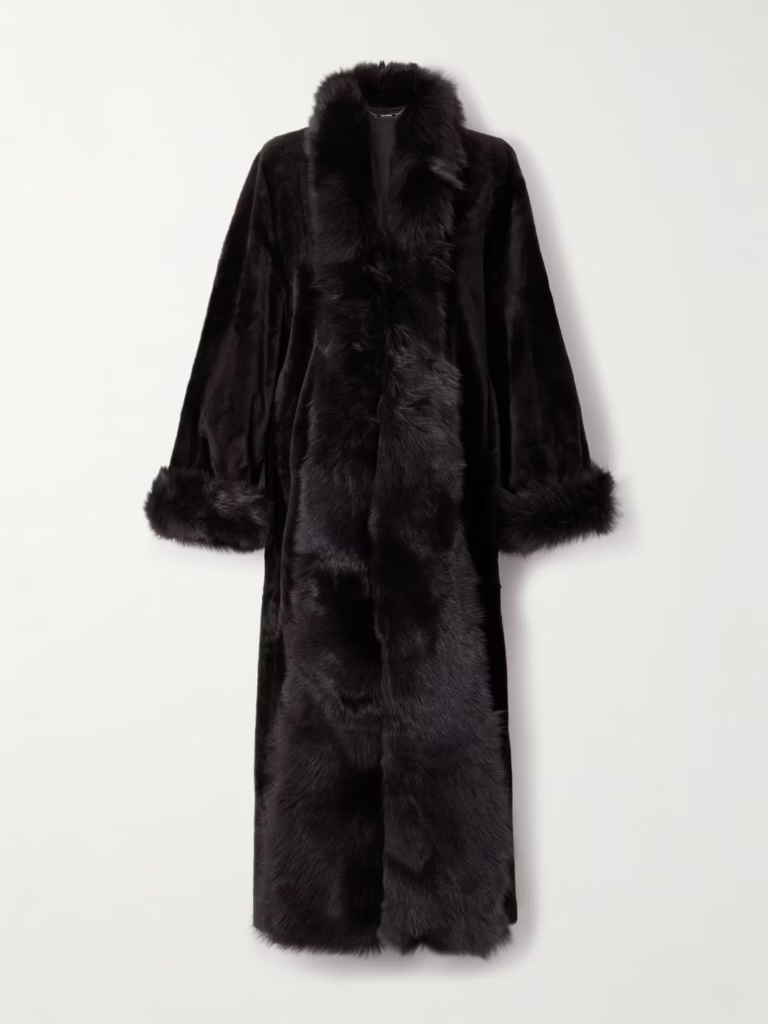
https://i.pinimg.com/474x/0f/8b/97/0f8b97893cb44c3842337acb121fcedd.jpg
https://i.pinimg.com/736x/c5/3f/9e/c53f9ed653ee343741eb58460b049918.jpg
https://i.pinimg.com/736x/fb/2b/53/fb2b53b03646e17889538e34d276bfba.jpg

Why it works: The contrast of texture (soft knit + satin slip) creates high-style drama with minimal pieces.
Styling Tip: Leave one shoulder of the sweater slipping off for an effortless vibe.
Travel Tip: Bring flats or ankle boots to keep the look practical for sightseeing.

3. Monochrome Layering

https://margaretofyork.com/wp-content/uploads/2025/05/IMG_2818-2-768x1024.jpg
https://juliaberolzheimer.com/wp-content/uploads/2021/07/jb-20210720-black-white-beige-1004917.jpg
https://livinglesh.com/wp-content/uploads/2023/09/fall-tan-sweater-dress-1440x2160.jpg

Why it works: A single-colour palette elongates your frame and looks polished.
Styling Tip: Stick to one tone (e.g., beige, oatmeal) and vary textures.
Travel Tip: Ease of mix-and-match: just swap accessories and you’re ready for dinner.

4. Belted Sweater Over Dress

https://www.merricksart.com/wp-content/uploads/2021/10/sweater-belted-over-midi-dress.jpg

Why it works: The belt defines your waist and prevents the sweater from looking bulky.
Styling Tip: Use a thin leather belt over the sweater, not under it.
Travel Tip: Choose belts that are flat and foldable.

5. Mini Dress + Oversized Sweater

https://i.pinimg.com/474x/97/4c/03/974c03a1846f0ebbdab40f10a2091ea4.jpg
https://images.squarespace-cdn.com/content/v1/5c3d12de365f023502e927a7/1705520426236-778L2TUIPWBYJKZ18MAF/sweater_over_dress_outfit_7.jpg
https://i.pinimg.com/564x/cd/3f/79/cd3f79505d2f9a068f13362c67aa058f.jpg

Why it works: A relaxed sweater over a short dress looks relaxed and modern.
Styling Tip: Add tights or boots for cooler weather.
Travel Tip: Pack one pair of tights and ankle boots instead of a second dress.

6. Jacket-Style Cardigan + Dress

https://besoyou.com/wp-content/uploads/2023/08/cardigan-to-wear-with-dress-16.jpg
https://i.pinimg.com/564x/c4/2c/01/c42c017d103bd0f6001ccefe5586bb65.jpg
https://i0.wp.com/styleoverthemoon.com/wp-content/uploads/2023/09/how-to-style-long-cardigans-with-a-dress.jpg?resize=768%2C1024&ssl=1

Why it works: A long cardigan acts like a sweater and a light jacket in one.
Styling Tip: Keep the cardigan open to show the dress and avoid adding bulk.
Travel Tip: Choose a cardigan that’s neutrally coloured for maximum outfit flexibility.

7. Structured Sweater + Shift Dress

https://thefoxandshe.com/wp-content/uploads/2024/03/sweater-over-dress-1.jpg
How to Wear a Sweater Over a Dress

Why it works: Tailored, structured pieces translate well for business or travel wear.
Styling Tip: Opt for dress with clean lines; avoid ruffles or excessive detail.
Travel Tip: A slip dress plus a fine knit sweater fits easily into a carry-on wardrobe.


Body-Type & Fabric Tips

  • Petite frames: Choose cropped sweaters or belts to avoid overwhelming your height.
  • Curvier figures: Define the waist with a belt and choose V-neck sweaters.
  • Tall frames: Midi or maxi dresses work beautifully under any sweater length.
  • Fabric considerations:
    • Lightweight knit + satin/slip dress = breathable + elegant
    • Chunky knit + cotton or wool dress = warm + textured
    • Pack-friendly fabrics: wool-blend, fine cashmere, wrinkle-resistant synthetics

Travel-Smart Packing Advice

  • Roll dresses and fold the sweater on top to save space and avoid creases.
  • Choose one neutral and one accent colour per trip to simplify outfit picks.
  • Accessorise smart: boots or loafers, a simple belt, and a scarf for layering.
  • Choose dresses that double for day and night — then layer the sweater for variety.

Why This Post Will Out-Rank the Style Your Occasion Article

  • Deeper content: 7 styling formulas vs a basic list.
  • Travel-focused: taps into a unique niche of travel-style layering.
  • Stronger SEO: targeted long-tail keywords + user intent for “how to” layering.
  • Fresh visuals and layout (including image groups above).
  • Richer user experience: body-type guides, packing tips, real-life use cases.

Final Thoughts

Wearing a sweater over a dress is no longer just a styling trick — it’s a wardrobe essential for those who move through changing climates, cities, and days. With the right proportions, textures, and accessories, you’ll master this look with confidence and polish.

Go on — pull out that dress you loved in summer, pick your favourite sweater, and layer with intention. Your travel wardrobe just got smarter.

#SweaterOverDress #LayeringTips #Fall2025Fashion #SheTravelsChic

Runway energy has shifted from quiet luxury to joyful expression. After seasons of muted minimalism, Spring/Summer 2026 brings colour, emotion, and travel-ready elegance back into our wardrobes.

From the Pop of Red revival to Modern Prep reinventions, fashion feels free again — more expressive, more wearable, and far more exciting for women on the go.

At She Travels Chic, we’ve translated the 10 runway trends defining 2026 into outfits you can actually wear while exploring, flying, or working abroad.


1. The Great Debut — Quiet Confidence Meets Global Glamour

The runways declared it: 2026 is the year of the Great Debut, when new designers and bold silhouettes step into the spotlight.

For travel fashion, this translates to “statement simplicity” — clean lines, sculptural shapes, and quality fabrics that photograph beautifully yet pack light.

How to Wear It:

Travel Tip: A sculptural linen dress doubles as both daywear and dinner attire — just switch sneakers for strappy heels.


2. Pop of Red — The Color Moment Defining SS26

No trend is louder — or simpler — than red. Vogue called it the “It Color of the Season”, and for good reason: red signals confidence, passion, and a return to joy.

How to Wear It:

  • A red slip skirt with a white tee for brunch in Milan.
  • A crimson tote or ballet flats to elevate an airport outfit.
  • Red nails + lips to add polish to neutrals.

Travel Tip: Red pairs beautifully with denim, navy, or tan — all staples of your capsule travel wardrobe.


3. Monochrome Brown — The New Minimalism

Forget head-to-toe black — brown is the new cool girl’s neutral. From cocoa to camel, monochrome brown was a standout across runways from Chloé to Ferragamo.

How to Wear It:

  • Layer tonal pieces (sand + mocha + coffee).
  • Add white sneakers or gold jewelry for contrast.

Travel Tip: This palette makes packing a dream — every piece mixes and matches seamlessly.


4. From the Neck Up — High Collars, Scarves & Statement Necklines

According to Vogue, collars, scarves, and high necklines are having a renaissance — a trend that suits travelers perfectly.

How to Wear It:

  • A lightweight scarf tied like a Parisian.
  • A funnel-neck top under a trench.
  • Collared blouses with pearl earrings.

Travel Tip: Scarves double as shawls on chilly flights and elevate any outfit in seconds.


5. Modern Prep — Polished, Playful, and Perfectly Packable

This isn’t your old school uniform. Modern Prep is crisp white shirts, pleated skirts, collegiate stripes, and loafers with attitude.

How to Wear It:

  • A striped button-down over a satin slip dress.
  • A navy cardigan around the shoulders for European city strolls.

Travel Tip: A pleated skirt packs flat and looks great from morning museum visits to rooftop cocktails.


6. Maximalism for Minimalists — Subtle Drama, Effortless Style

If you’ve mastered minimalist dressing, this is your next move. Designers are layering neutrals with texture — ribbed knits, crinkled satins, and embroidered details — to keep outfits chic yet interesting.

How to Wear It:

  • Mix matte and glossy fabrics in similar tones.
  • Add one bold element — a statement belt or metallic shoe.

Travel Tip: Choose textured fabrics that resist wrinkles; they’ll survive long flights and still look runway-ready.


7. Funnel-Neck Jackets & The Coat Reboot

Who What Wear called funnel-neck outerwear one of the top trends for 2026 — sleek, modern, and surprisingly versatile.

How to Wear It:

  • Layer over a monochrome look for instant structure.
  • Pair with wide-leg trousers or tailored shorts for city elegance.

Travel Tip: Choose a lightweight version that folds easily — perfect for unpredictable climates or breezy evening walks.


8. Soft Power — Tailoring That Travels

Power dressing has evolved into soft power — think blazers with relaxed fits, trousers with stretch, and tonal layering that radiates quiet authority.

How to Wear It:

  • Oversized linen blazer + tank + trousers.
  • Add minimalist gold jewelry for polish.

Travel Tip: Choose wrinkle-resistant fabrics; you’ll step off the plane looking boardroom-ready.


9. Gone Bourgeois — Elevated Basics for the Jet Set

Old-money style isn’t fading — it’s evolving. Think crisp shirts, silk blouses, loafers, and understated bags that whisper luxury.

How to Wear It:

  • White button-down + cropped trench + high-waisted jeans.
  • Neutral ballet flats + woven tote.

Travel Tip: Focus on fabrics that breathe — linen, cotton, silk — so you can stay chic in any climate.


10. Chaotic Customisation — The Return of Play

Vogue Business calls this “chaotic customisation” — a Gen Z-fueled shift toward self-expression. Expect mismatched accessories, DIY accents, and vibrant color clashes.

How to Wear It:

  • Layer jewelry in mixed metals.
  • Mix prints or clash textures for personality.
  • Personalize your tote or denim jacket with patches or pins.

Travel Tip: Pack one statement piece — a colorful scarf, bag, or jacket — to reinvent your looks on the go.


How to Pack These Trends Like a Pro

Creating a Spring/Summer 2026 capsule travel wardrobe is easier than it sounds. Combine trends that harmonize, not compete.

Your SS26 Capsule Packing Formula:

  1. 3 Neutrals: camel, cream, white
  2. 2 Accent Colors: red + soft pink or denim blue
  3. 1 Print: plaid or stripe
  4. 1 Statement Piece: sculpted dress, coat, or blazer
  5. Accessories: silk scarf, gold hoops, statement flats

She Travels Chic Tip: Stick to one base color story so you can mix-and-match across all destinations.


Shop the Trends — Editor’s Picks

TrendEditor’s PickWhere to Shop
Pop of RedRed slip skirtZara / Mango
Modern PrepStriped button-downH&M Conscious
Monochrome BrownWool-blend shortsMassimo Dutti
Funnel-NeckShort trenchCOS Stores
Soft PowerLinen blazer& Other Stories

Styling Takeaways for 2026 Travelers

  • Bold is Back: Color, playfulness, and individuality define 2026.
  • Comfort Matters: Every trend is wearable — fluid fabrics, practical layers, relaxed silhouettes.
  • Capsule is Key: The smartest travelers focus on mix-and-match minimalism.
  • Effortless Elegance: The She Travels Chic motto — chic doesn’t mean complicated.

Final Thoughts

Spring/Summer 2026 isn’t about chasing trends — it’s about owning your personal aesthetic while embracing joy and movement. From red accents to soft tailoring, these trends translate beautifully from runway to real life, from city streets to coastal escapes.

Fashion is global, but your style is personal. Pack what inspires you, travel light, and remember — chic looks better when it feels effortless.

Pin it, pack it, and make it yours.
#SheTravelsChic #SpringSummer2026 #TravelInStyle

Pin It